High-Low as Expression of the Brazilian Digital Fabrication
| Date | |
|---|---|
| Last updated | |
| Authors | Daniel Nunes Locatelli, Arthur Hunold Lara, Thiago Henrique Omena, Adalberto de Paula |
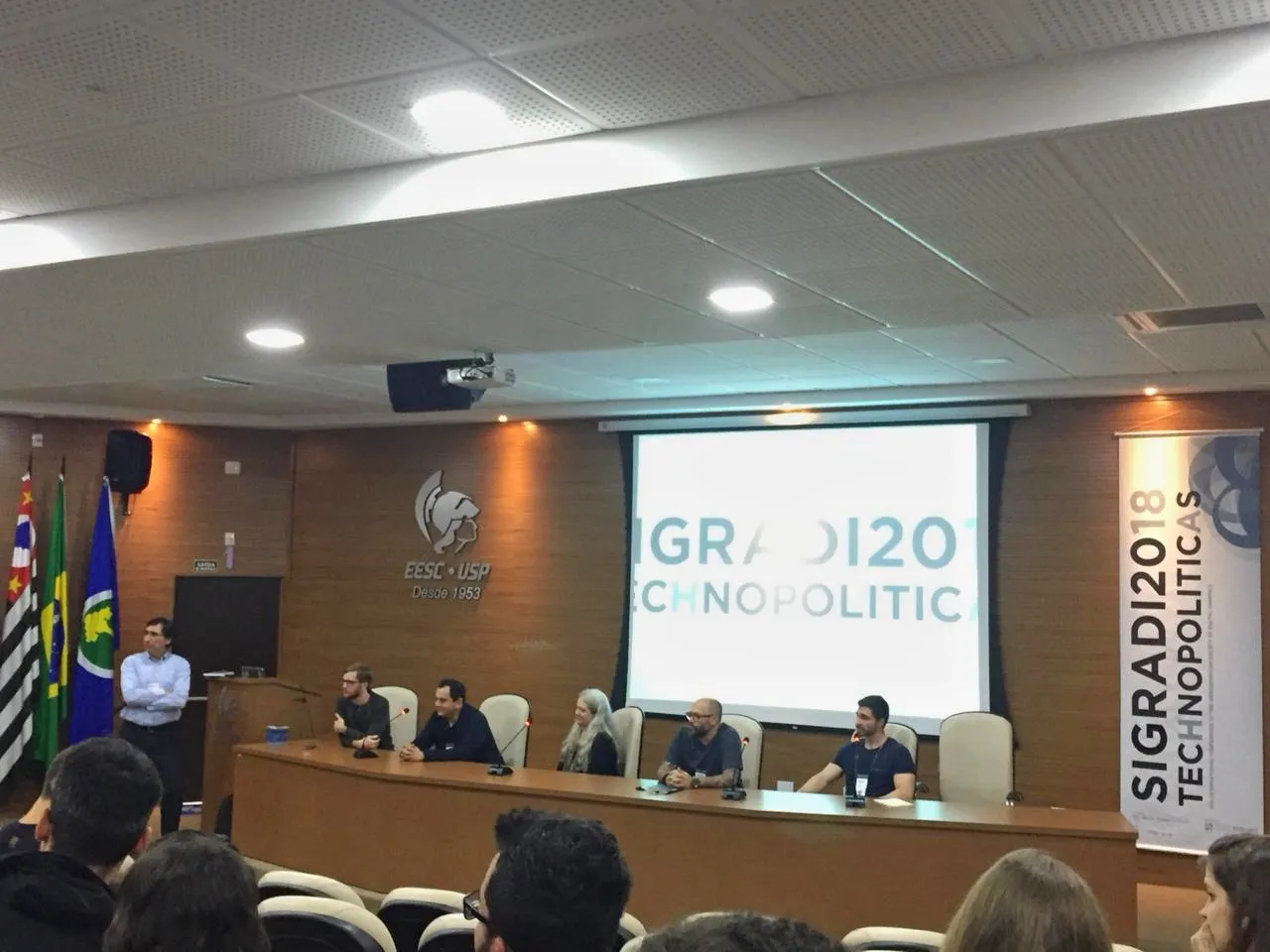
| Place | SIGRADI 2018 Technopolitics |
| Location | São Carlos, Brazil |
| Language | Portuguese |
| Link | High-Low paper at SIGraDi 2018 |
Abstract
This paper is the result of an investigation about the influence of digital processes in Design and its importance in innovation within ephemeral architecture through the concept of High-Low. The ephemeral architecture has the potential to combine academic and artistic knowledge to Brazilian commercial production. Here is presented one experimental case study designed to Expo Revestir for Docol in 2017 that balances the paradigm of computational design with the academic field and viable commercial applications.
Introduction
The way of living and occupying the world has undergone a great transformation throughout history as innovations aligned with local culture in the globalized world. Recently, after the mid-twentieth century, the population explosion transformed the urban environment with new production technologies to address emerging problems. As a result of a globalized world full of innovations, the processes of design and execution of architecture can also be cited as evolutions that occurred through available technologies.
As Rivka Oxman1 OXMAN, Rivka (2006) “Theory and Design in the First Digital Age” Design Studies, Vol. 27 No. 3 pp. 229 - 265. proposed when she wrote “Theory and Design in the First Digital Age”, the classical design process was previously understood as analysis, synthesis, evaluation and decision; when in a digitally mediated environment it passes through the phases of generation, representation, evaluation and performance. This change in design mediation happens after major transformations that occurred in fabrication with the introduction of numerical machines that would control the entire production line of the aeronautical, naval and automotive industries. However, the concrete expression of these technologies in architecture happens according to the political, social, economic and cultural reality of each region.
Since the 1950s, computers have assisted in the production of complex aircraft parts. For Gabriela Carneiro2 CARNEIRO, Gabriela. Arquitetura interativa: contextos, fundamentos e design. 2014. Tese (Doutorado em Design e Arquitetura) - Faculdade de Arquitetura e Urbanismo, Universidade de São Paulo, São Paulo, 2014. , the computer is like a partner of the architect in the formulation and generation of spaces. “More than form modeling, from its appearances, the architect’s focus was always to employ, in architecture, the potential of the computer to simulate natural processes” (Carneiro, p.87)2 CARNEIRO, Gabriela. Arquitetura interativa: contextos, fundamentos e design. 2014. Tese (Doutorado em Design e Arquitetura) - Faculdade de Arquitetura e Urbanismo, Universidade de São Paulo, São Paulo, 2014. . Responsible for introducing computation into architectural practice, the first generations of computer aided design - CAD software used the digital environment as a kind of electronic drawing board (instead of using the computer as an assistant to the creative process, it was used only as a graphic representation tool) as noted by Araújo3 ARAÚJO, A. L. Autômatos celulares: Definição e aplicações na arquitetura. In: CELANI, M. G. C.; SEDREZ, M. (Orgs.). Arquitetura contemporânea e automação: prática e reflexão. São Paulo: ProBooks, 2018. P. 68 a 84. .
For Sedrez4 SEDREZ, M. e MARTINO, J. A. Sistemas Generativos. In: CELANI, M. G. C.; SEDREZ, M. (Orgs.). Arquitetura contemporânea e automação: prática e reflexão. São Paulo: ProBooks, 2018. P. 55 a 68. , before the industrialization of construction, there was an appreciation of complex forms when artisanal methods were conditioned to architecture; however, in the post-war period, the fabrication of architecture underwent great changes, and it was this change that was pointed to as one of the foundations of modernism. This was the period in which ideological guidelines emerged that defended simple forms (by virtue of simplification and speed in architectural fabrication). Thus, this was a conditioning factor that catalyzed the disappearance of complex forms.
With the evolution of computers and the increase in speed and capacity of data processing, the digital environment also began to assist design processes in what became known as Digital Design. The defense of this new area of study was championed by exponents such as William Mitchell in his anti-tectonic manifesto, Rivka and Robert Oxman, in defense of the new Structuralism (which reversed the order of the design process from form to structure to material, to material to structure and form), among several other authors of equal importance.
In this new way of thinking about the digital design process, the computer, in addition to producing drawings, was also used to solve logical problems linked to the design process. These software tools that assisted architectural conception opened new opportunities by enabling the design and construction of complex forms that were, until recently, difficult and expensive to be designed, produced and assembled using traditional construction technologies. Through four industrial revolutions (the steam engine, mass production, mass customization with CNC machines) and industry 4.0, a new tradition was established through digital technologies to link the project directly to the construction site.
Before the beginning of the digitalization of the creative architectural process, the design practice was developed to serve both manual and mechanical fabrication. Through the digital design and digital fabrication process, here defined as the production of physical objects from digital models (Tramontano)5 TRAMONTANO, Marcelo. Quando pesquisa e ensino se conectam. Design paramétrico, fabricação digital e projeto de arquitetura. Arquitextos, São Paulo, ano 16, n. 190.01, Vitruvius, mar. 2016. Disponível em: https://doi.org/10.5151/despro-sigradi2015-100144. Acesso em: 21 jun. 2016. , architecture gained a hybrid layer of materialization that does not need to surrender to infinite repetition to facilitate production. Thus, through this process, one adopts the idea of a production that works with the digital file of the project being sent and produced directly in the industry, a process known as file-to-factory (Tramontano; Soares)6 TRAMONTANO, Marcelo; SOARES, João Paulo. Arquitetura emergente, design paramétricos e o representar através de modelos de informação. V!RUS, São Carlos, n. 8, dez. 2012. Disponível em: https://revistas.usp.br/virus/en/article/view/228727. Acesso em: 26 jul. 2016. . Each artisanal technique, within this sphere, is rethought through processors and machines in order to optimize the form process and expand its possibilities. In this way, digital fabrication manages to achieve an extremely high level of form definition, far superior to human capacity when we talk about complex geometries produced in series with precision.
On the other hand, the education of an architect in Brazil is very comprehensive, allowing a wide range of practice. Civil construction, which is one of its main focuses, tends to have long execution times and little openness for exploration and experimentation of new techniques and design methods. However, currently, “there is a slow but irreversible change in the productive processes of construction arising from the expansion of industrial processes, now enhanced by the advent of computerization” (Tramontano, p.01)5 TRAMONTANO, Marcelo. Quando pesquisa e ensino se conectam. Design paramétrico, fabricação digital e projeto de arquitetura. Arquitextos, São Paulo, ano 16, n. 190.01, Vitruvius, mar. 2016. Disponível em: https://doi.org/10.5151/despro-sigradi2015-100144. Acesso em: 21 jun. 2016. . Technology has always been thought of autonomously and in isolation, as a vanguard of futures and evident solutions for problems we don’t yet know. Thus, within this scenario, ephemeral architecture manages to include digital design methods because it generally produces unique pieces with a high level of complexity compared to traditional construction. Furthermore, within this area the project development and construction timelines, which vary from 1 to 6 months, tend to be lower and with a high budget. In a typical ephemeral architecture project for events, the efficiency in all development stages generates pressure due to the short deadline and high cost. In this way, this area proves to be a naturally fertile field for the development and use of digital design and fabrication methods.
High-Low
According to SUBdV7 SUBdV. “CoBLOgó / SUBdV” 26 Jun 2017. ArchDaily Brasil. Disponível em: https://www.archdaily.com.br/br/874036/coblogo-subdv ISSN 0719-8906. Acesso 16 Jun. 2018. , the term High-Low emerges from the union of two concepts, where High represents the technology used for the generation of architecture through computation and Low the instructions produced so that unskilled labor can build with digital fabrication. For example, in one of their projects, CoBLOgó, positioning guides for the pieces were exported from a parametric script. These guides were laser cut in cardboard material and placed on a shelf also digitally fabricated with a CNC router where the foreman only needed to place the blocks adjacent to the guides and interleaved battens for structural integrity. In short, this process that unites parametric design and digital fabrication with simple construction techniques and local materials at the construction site illustrates the process called High-Low (SUBdV)7 SUBdV. “CoBLOgó / SUBdV” 26 Jun 2017. ArchDaily Brasil. Disponível em: https://www.archdaily.com.br/br/874036/coblogo-subdv ISSN 0719-8906. Acesso 16 Jun. 2018. . This artifice that combines high technology (parametric computation and digital fabrication) with low-technology construction methods and cheap local materials can create a new Brazilian identity in digital design, to escape the growing ubiquitous and generic tendency of contemporary parametric aesthetics (SUBdV apud Rojas)8 ROJAS, Cristobal. “CoBLOgó / SUBdV” 5 Ago. 2017. Download CAD Blocks, Drawings, Details, 3D, PSD Blocks. Disponível em: https://www.caddownloadweb.com/coblogo-subdv/. Acesso em 23 Jun. 2018. .
Based on the thinking of Anne Save de Beaurecueil9 CELANI, M. G. C.; SEDREZ, M. Arquitetura responsiva. Entrevista com Anne Save de Beaurecueil. In: CELANI, M. G. C.; SEDREZ, M. (Organizadores). Arquitetura contemporânea e automação: prática e reflexão. São Paulo: ProBooks, 2018. p. 174 a 181. , the low number of universities working with digital fabrication and parametric architecture is one of the problems in the education of architects in Brazil that generates the delay in the industrialization of architectural construction with precision. “If architects are not using new techniques they are not going to pressure the construction industry to change. […] so I think that, to really advance in construction, one must start with the students, because they will pressure the industry, they will inspire the industry” (Celani, Sedrez)10 CELANI, Gabriela; SEDREZ, Maycon. Entrevista com Anne Save de Beaurecueil. Entrevista, São Paulo, ano 14, n. 055.01, Vitruvius, jul. 2013. Disponível em: http://www.vitruvius.com.br/revistas/read/entrevista/14.055/4776. . Thus, High-Low is a way to innovate not just by repeating what is happening on the international scene, but to unite Brazilian architecture and culture with the new technology coming from abroad.
Case Study: Docol Pavilion 2017
Concept Design
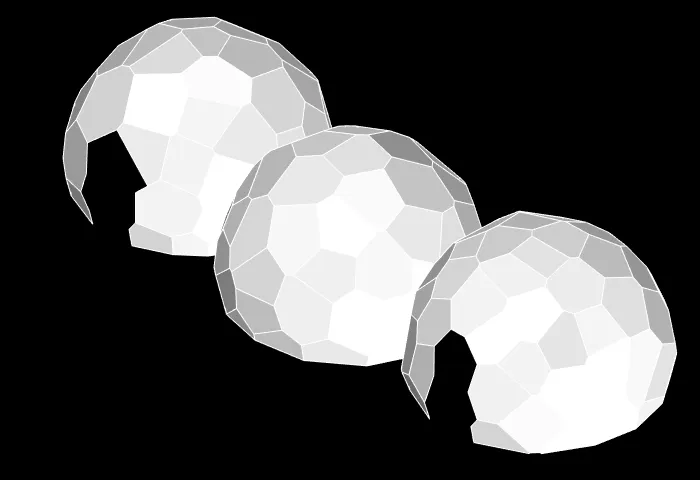
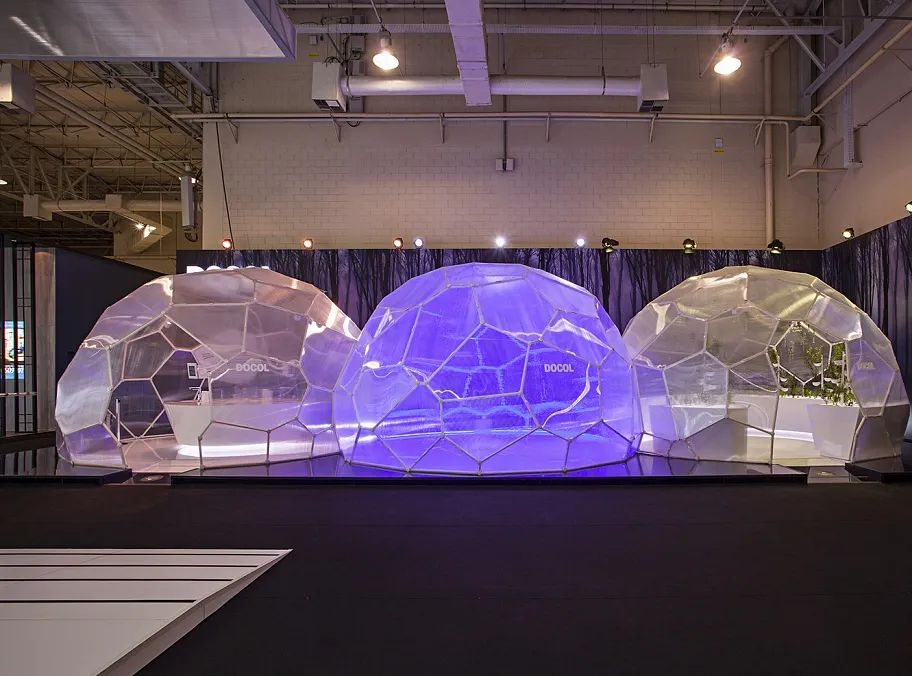
The first phase was the conceptual design, in which the novelties of the company’s products and their market positioning were studied. This is how the idea of relating the new line of ozone faucets to the concept was reached. When ozone is mixed with water, it grants hygienic properties such as combating micro-organisms and removing strong odors without, however, harming the environment. It was then determined that the final structure of the Docol pavilion should refer to the ozone molecule, that is, three oxygen atoms connected to each other. The final form should then be composed of three intersecting domes, the shell should use alveolar polycarbonate and the domes conceived to mimic a Voronoi diagram, that is, the surfaces of these three domes should be “coated” with Voronoi cells. The concept is then the result of the dialogue between an idea that connects with the brand and an efficient constructive system.
This result was achieved following a non-linear design process that underwent iterations to arrive at the final product. That is, there was a study process of several conditioning factors that were gradually connecting through the feedback of multiple intermediate tests. At Atelier Marko Brajovic, it is understood that in the design process “it doesn’t matter if you start from top to bottom or from bottom to top. When you move through the whole cycle it has to combine both approaches” (Wallisser, 2018, p. 198 to 205). As a result, the hierarchy of geometries here is clear, and it can vary according to the needs of the next phase.
Generative System
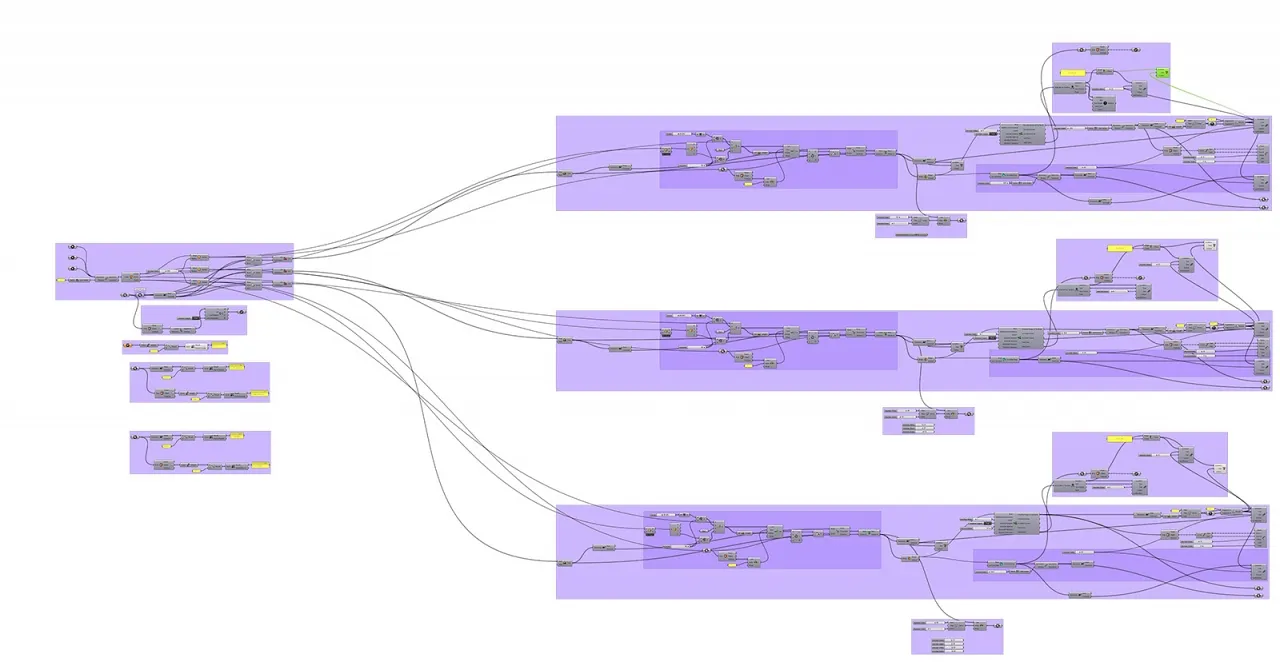
In this phase, with the concept consolidated, the focus was to generate a viable project that met the client’s needs. For this, the use of Rhinoceros software and its visual programming plug-in Grasshopper11 TEDESCHI, A. AAD_Algorithms-Aided Design: Parametric Strategies using Grasshopper, Italy: Le Penseur, 2014. was fundamental. The modeling process began with the parameterization of three hemispheres limited by the volume provided for the event, with parts that overlapped and with parameters that allowed the alteration of the radius, the spacing of the spheres relative to the ground, the location of each sphere, etc.
For the development of the shell, the intersection between the hemispheres was used with a 3D Voronoi pattern. This generated a curved Voronoi pattern following the shape of the three hemispheres. For the next step, it was necessary to flatten this Voronoi pattern to obtain flat plates that fit perfectly and were ready for laser cutting. The Grasshopper plugin called Kangaroo12 PIKER, Daniel. Kangaroo: Form finding with computational physics. Architectural Design, 2013; 83(2); 136-137. was then used, which through a dynamic relaxation method calculates the necessary dimensions for each dome edge so that all Voronoi cells were flattened.
However, during this process it was verified that at the location where the spheres intersect, the edges need to maintain the same size and location while maintaining the fluidity of the form and without losing the Voronoi pattern. The algorithm was developed then so that during the flattening process of the cells, the edges of the intersections were forced to equalize.
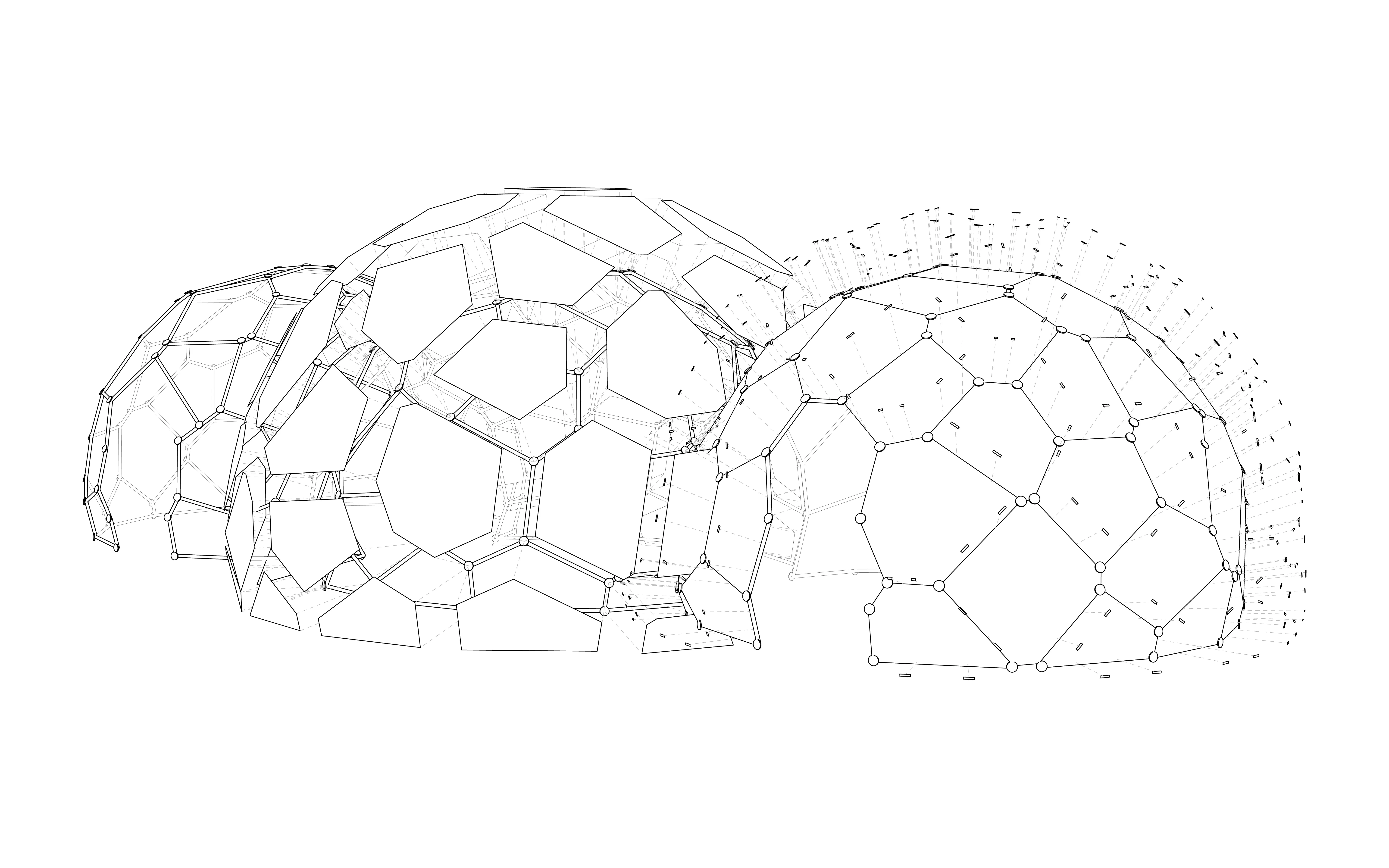
From this base geometry, the three-dimensional elements were created. The plates gained thickness and the rods gained diameter. It was also possible to create connection possibilities that could be produced through digital fabrication, such as 3D printing for example.
Fabrication
The third phase was the construction of the project itself. In this phase another company was contracted: Paleta Stands, located in the city of Joinville in Santa Catarina. They were responsible for the prototyping and fabrication of the pavilion, which meant the loss of control over the fabrication process that was envisioned during the programming and geometry consolidation phase through digital design. The company had all the documentation and files necessary for the production of the pavilion using exclusively digital fabrication methods. However, the instructions provided allowed them a great flexibility to solve the project in the most optimized way possible, taking into account the available technology, costs and workforce.
During technical visits to accompany the project development, it was verified that the fabrication process had mixed a variety of methods. The cutting of alveolar polycarbonate plates used laser cutting machines, which guaranteed high precision and a high-level final finish.
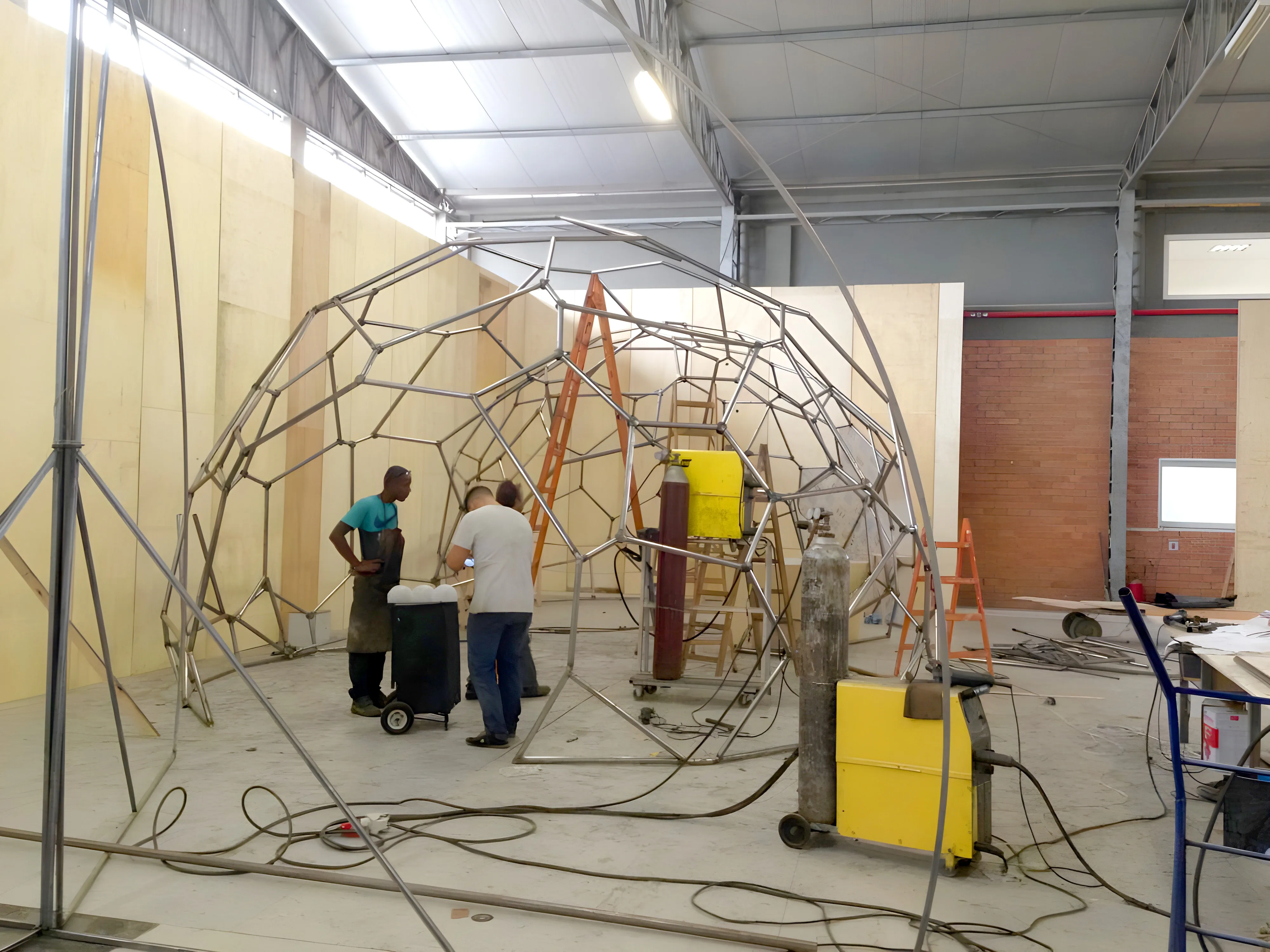
For the production of the metallic skeleton, a team of traditional blacksmiths was contracted who were not accustomed to producing a project of such formal complexity. They were given only the dimensions of the metallic rods and perspectives with the rods properly labeled. The blacksmiths started welding the pieces of the base in the general floor plan, but for the following rods they did not have spatial references to guide the welding process. Thus, it was an immense work of trial and error, because as the rods were welded, they began to verify that the next rods on the list did not fit exactly as indicated in the drawings. It was then necessary to saw the previous pieces to rearrange them so that the next ones would fit in the specified locations. The project could only be more clearly understood by the blacksmiths when we showed them a physical model at a scale of 1:10 during one of the technical visits made.
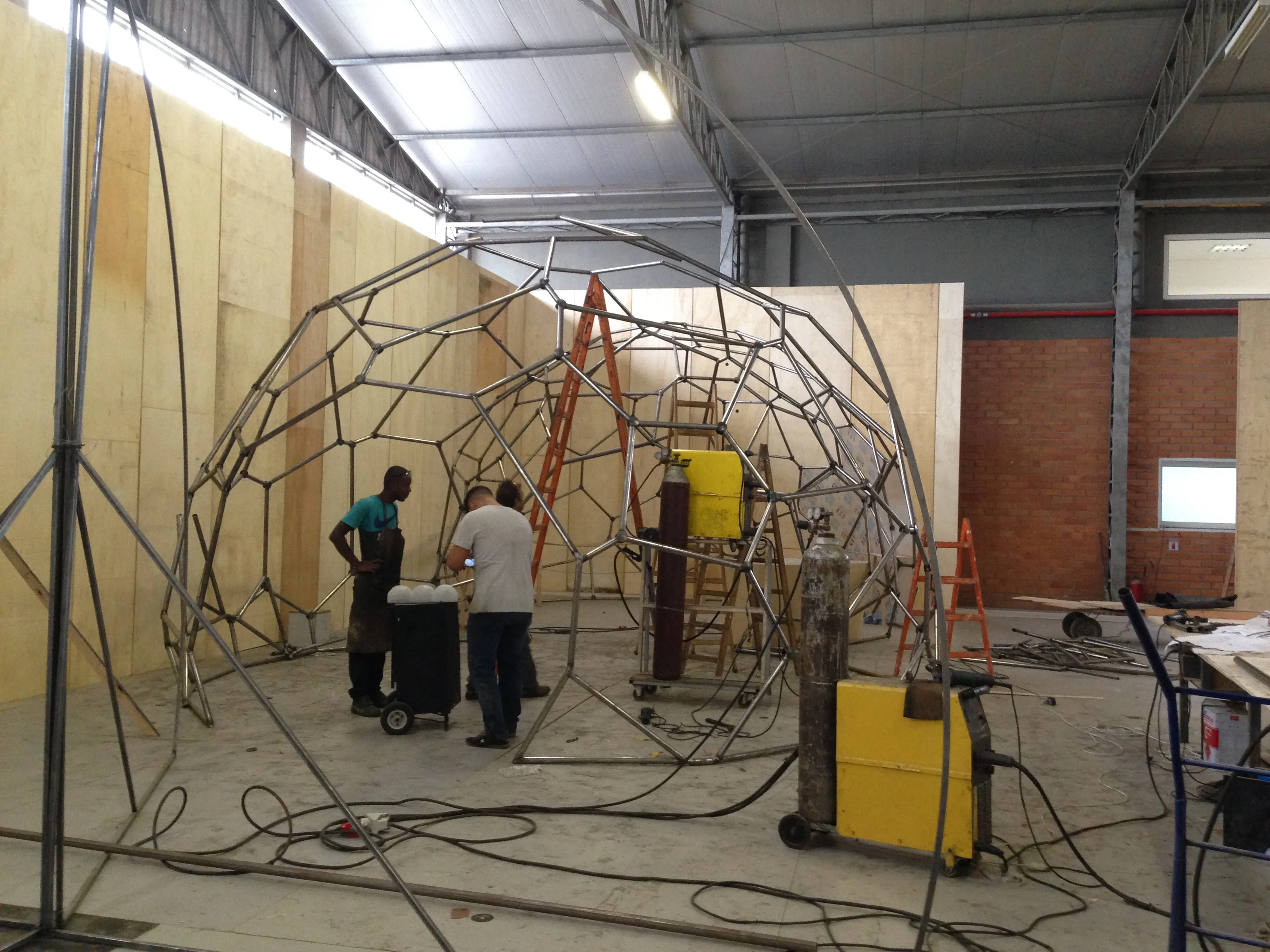
This process, which resembled a puzzle, ended up causing distortions in the Voronoi cells that had been flattened during the design phase. Each cell ended up presenting double curvatures that were compensated by the flexibility of the alveolar polycarbonate. This ended up generating distorted reflections on the shell surface that can be noticed in Figure 7. This aesthetic result was not initially foreseen, but was absorbed and accepted as a natural aspect of this type of artisanal fabrication.
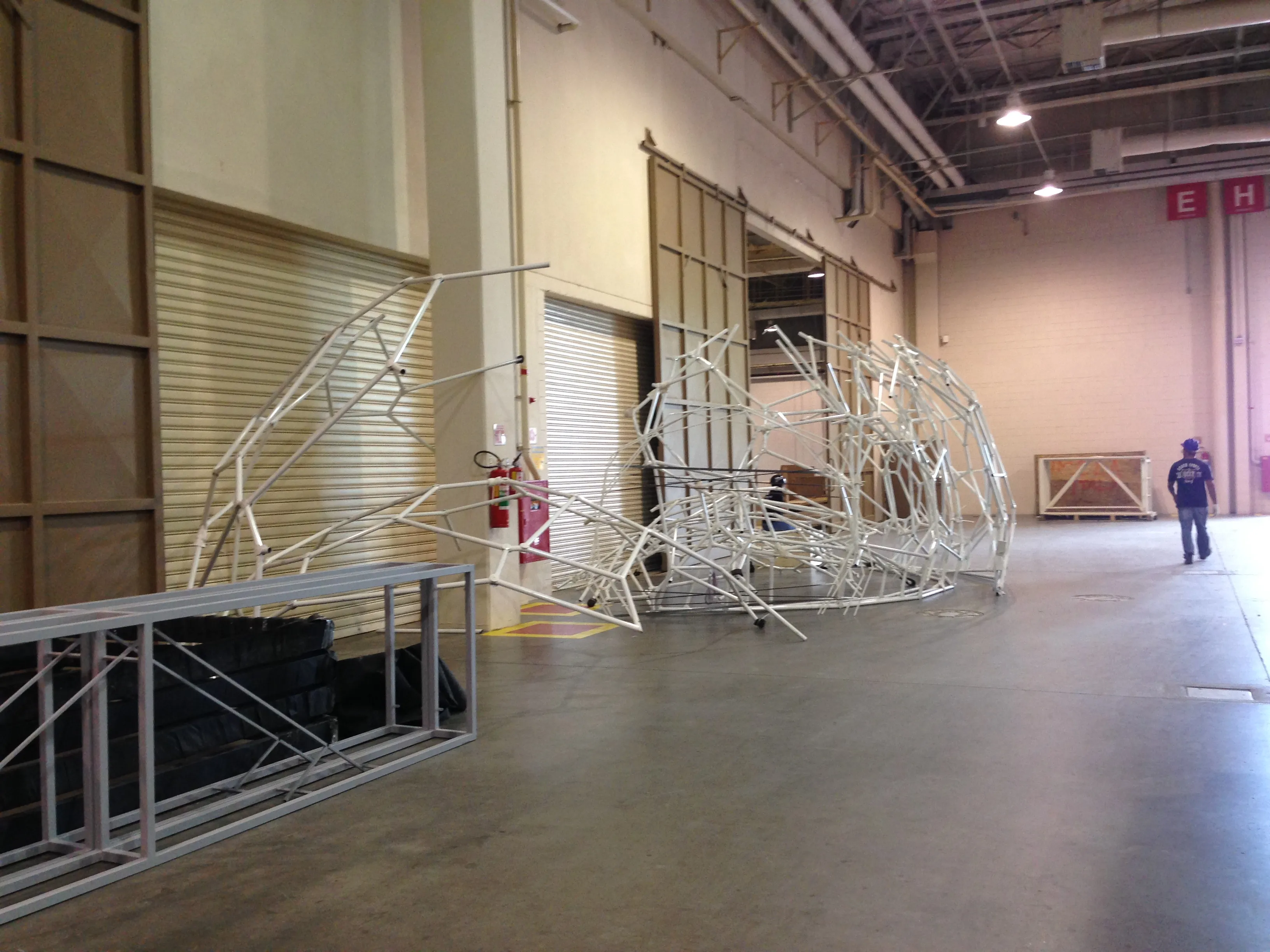
In addition to the fabrication by welding generating irregularities on the shell surface, it was necessary to segment the pavilion (Figure 6) so that it could be transported in a truck with maximum measurements of 8.5 x 2.4m x 2.5m (width, length and height respectively). This caused a few more small inconsistencies to arise throughout the process, but nothing that actually affected the final result.
Conclusion
Architects are witnessing a radical change in the method of design and fabrication of buildings. The question is no longer whether the profession will or will not adhere to these new technologies. But yes, how we can blend and take advantage of them without ignoring the traditional methods available. As Gaudí used physical models to talk with his craftsmen, in this study this didactic of approximating the digital environment to traditional blacksmiths proved very useful.
Designing using a generative system allowed in this case study a great flexibility in decision-making and in changing the dimensions of each dome and each Voronoi cell with just a few clicks. This means that the documentation was automatically updated, where the format and dimensions of each polycarbonate plate, the length of each metallic rod and the location of the bases on the floor were dynamically generated, without manual rework.
Finally, the need for architects to seek innovative solutions in the way architecture is made is evident, since this demand will determine whether there will be suppliers and workforce with the necessary knowledge to advance the current state of architecture in Brazil.
References
Footnotes
-
OXMAN, Rivka (2006) “Theory and Design in the First Digital Age” Design Studies, Vol. 27 No. 3 pp. 229 - 265. ↩︎
-
CARNEIRO, Gabriela. Arquitetura interativa: contextos, fundamentos e design. 2014. Tese (Doutorado em Design e Arquitetura) - Faculdade de Arquitetura e Urbanismo, Universidade de São Paulo, São Paulo, 2014. ↩︎ ↩︎2
-
ARAÚJO, A. L. Autômatos celulares: Definição e aplicações na arquitetura. In: CELANI, M. G. C.; SEDREZ, M. (Orgs.). Arquitetura contemporânea e automação: prática e reflexão. São Paulo: ProBooks, 2018. P. 68 a 84. ↩︎
-
SEDREZ, M. e MARTINO, J. A. Sistemas Generativos. In: CELANI, M. G. C.; SEDREZ, M. (Orgs.). Arquitetura contemporânea e automação: prática e reflexão. São Paulo: ProBooks, 2018. P. 55 a 68. ↩︎
-
TRAMONTANO, Marcelo. Quando pesquisa e ensino se conectam. Design paramétrico, fabricação digital e projeto de arquitetura. Arquitextos, São Paulo, ano 16, n. 190.01, Vitruvius, mar. 2016. Disponível em: https://doi.org/10.5151/despro-sigradi2015-100144. Acesso em: 21 jun. 2016. ↩︎ ↩︎2
-
TRAMONTANO, Marcelo; SOARES, João Paulo. Arquitetura emergente, design paramétricos e o representar através de modelos de informação. V!RUS, São Carlos, n. 8, dez. 2012. Disponível em: https://revistas.usp.br/virus/en/article/view/228727. Acesso em: 26 jul. 2016. ↩︎
-
SUBdV. “CoBLOgó / SUBdV” 26 Jun 2017. ArchDaily Brasil. Disponível em: https://www.archdaily.com.br/br/874036/coblogo-subdv ISSN 0719-8906. Acesso 16 Jun. 2018. ↩︎ ↩︎2
-
ROJAS, Cristobal. “CoBLOgó / SUBdV” 5 Ago. 2017. Download CAD Blocks, Drawings, Details, 3D, PSD Blocks. Disponível em: https://www.caddownloadweb.com/coblogo-subdv/. Acesso em 23 Jun. 2018. ↩︎
-
CELANI, M. G. C.; SEDREZ, M. Arquitetura responsiva. Entrevista com Anne Save de Beaurecueil. In: CELANI, M. G. C.; SEDREZ, M. (Organizadores). Arquitetura contemporânea e automação: prática e reflexão. São Paulo: ProBooks, 2018. p. 174 a 181. ↩︎
-
CELANI, Gabriela; SEDREZ, Maycon. Entrevista com Anne Save de Beaurecueil. Entrevista, São Paulo, ano 14, n. 055.01, Vitruvius, jul. 2013. Disponível em: http://www.vitruvius.com.br/revistas/read/entrevista/14.055/4776. ↩︎
-
TEDESCHI, A. AAD_Algorithms-Aided Design: Parametric Strategies using Grasshopper, Italy: Le Penseur, 2014. ↩︎
-
PIKER, Daniel. Kangaroo: Form finding with computational physics. Architectural Design, 2013; 83(2); 136-137. ↩︎
