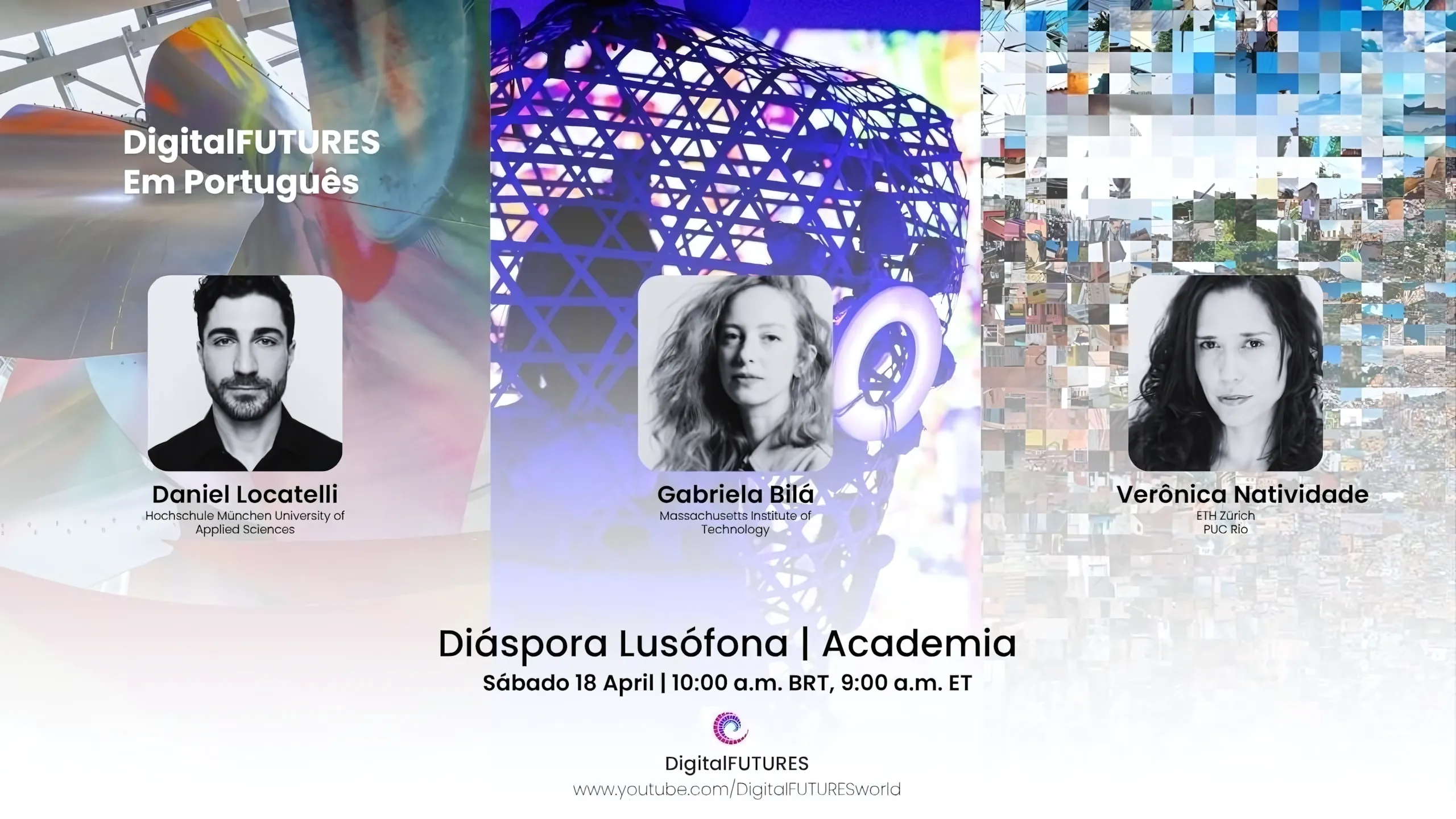
Digital Futures 2026: Entre o Prompt e a Obra
Talk on the journey from biomimicry to systems thinking and what's missing in AI for architecture: the perspective of a Brazilian architect trained and working in Germany.
My talks, workshops, and lectures.
Talk on the journey from biomimicry to systems thinking and what's missing in AI for architecture: the perspective of a Brazilian architect trained and working in Germany.
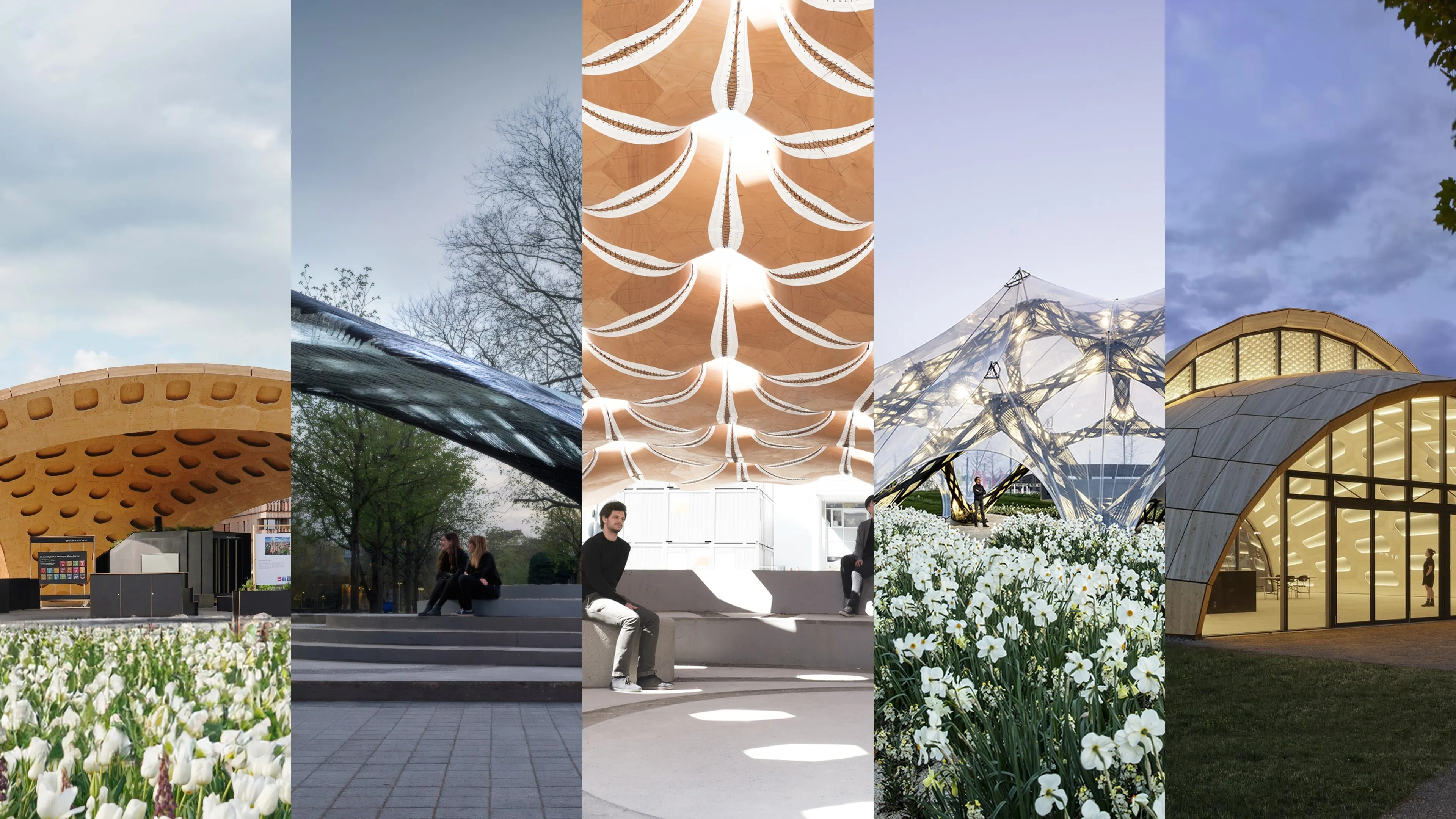
In this talk I presented the main computational design technologies in Germany, especially the ICD & ITKE at the University of Stuttgart and the company BuildSystems, connecting that trajectory to my own path between Atelier Marko Brajovic, ITECH in Stuttgart, and industry in Munich.
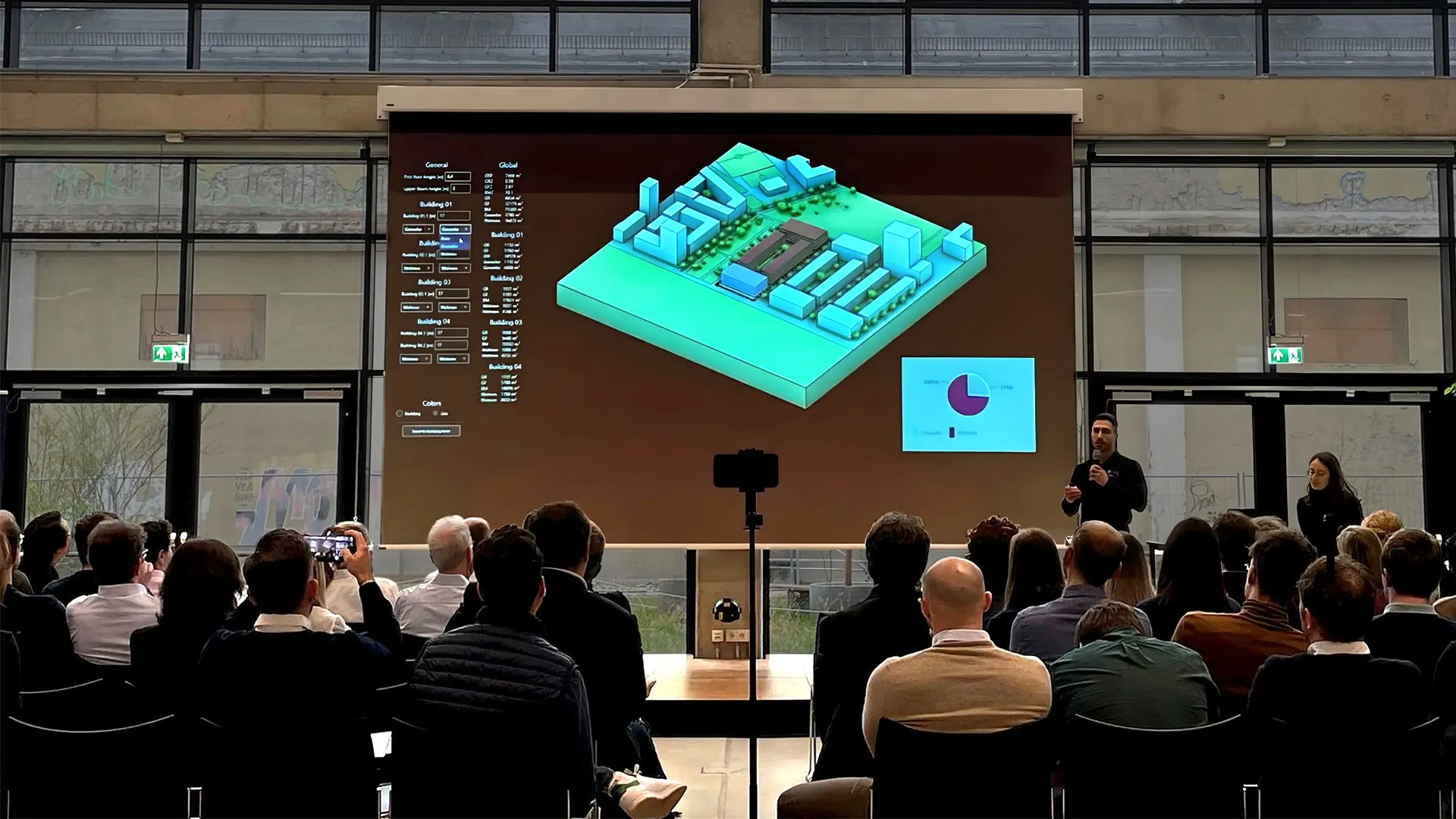
A pitch at the Siemens RIE Munich Conference on how computational tools can generate data to make sense of sustainability in the construction industry, from urban analysis to life-cycle assessment.
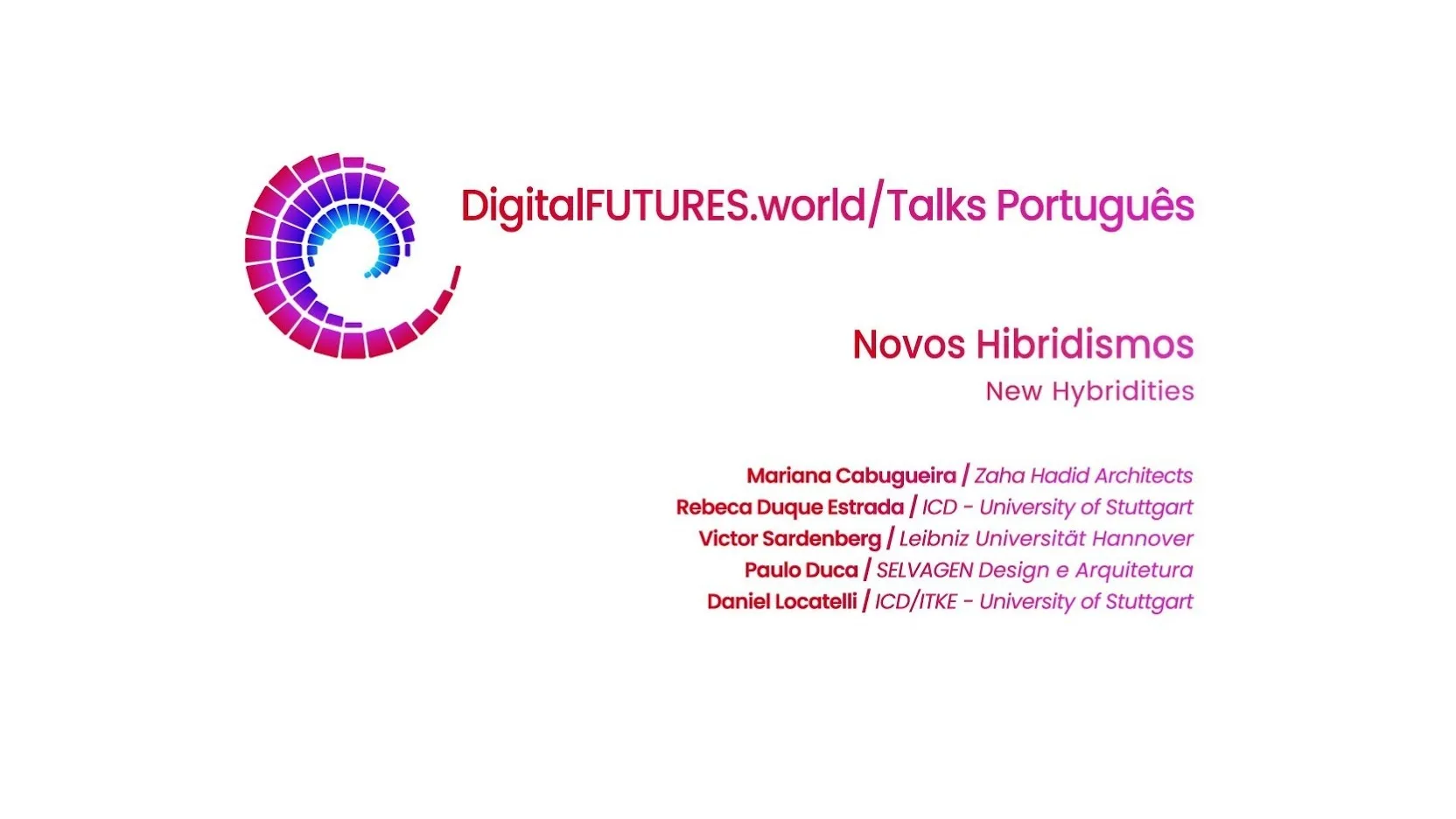
This session, opening the DigitalFutures series in Portuguese, brings together different innovative practices within the scope of computational methodologies applied in architecture and design, where artificial intelligence, generative algorithms, parametric design, robotics manufacturing, materials science, and biomimetics are part of a hybrid repertoire.
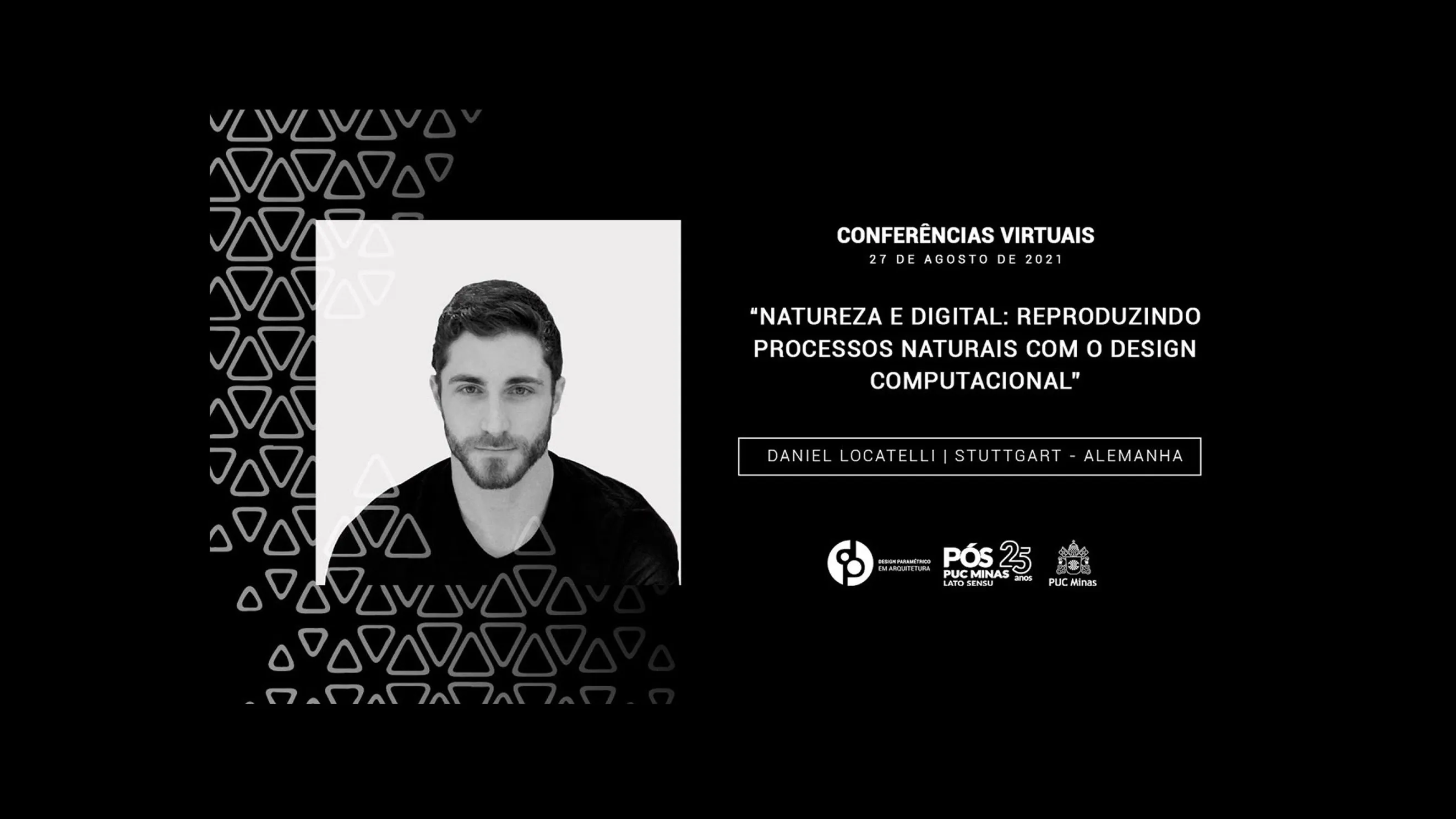
In this talk, I presented my work, the idea of reproducing natural processes with computational design, and key points I learned during my recently concluded master thesis in Germany.
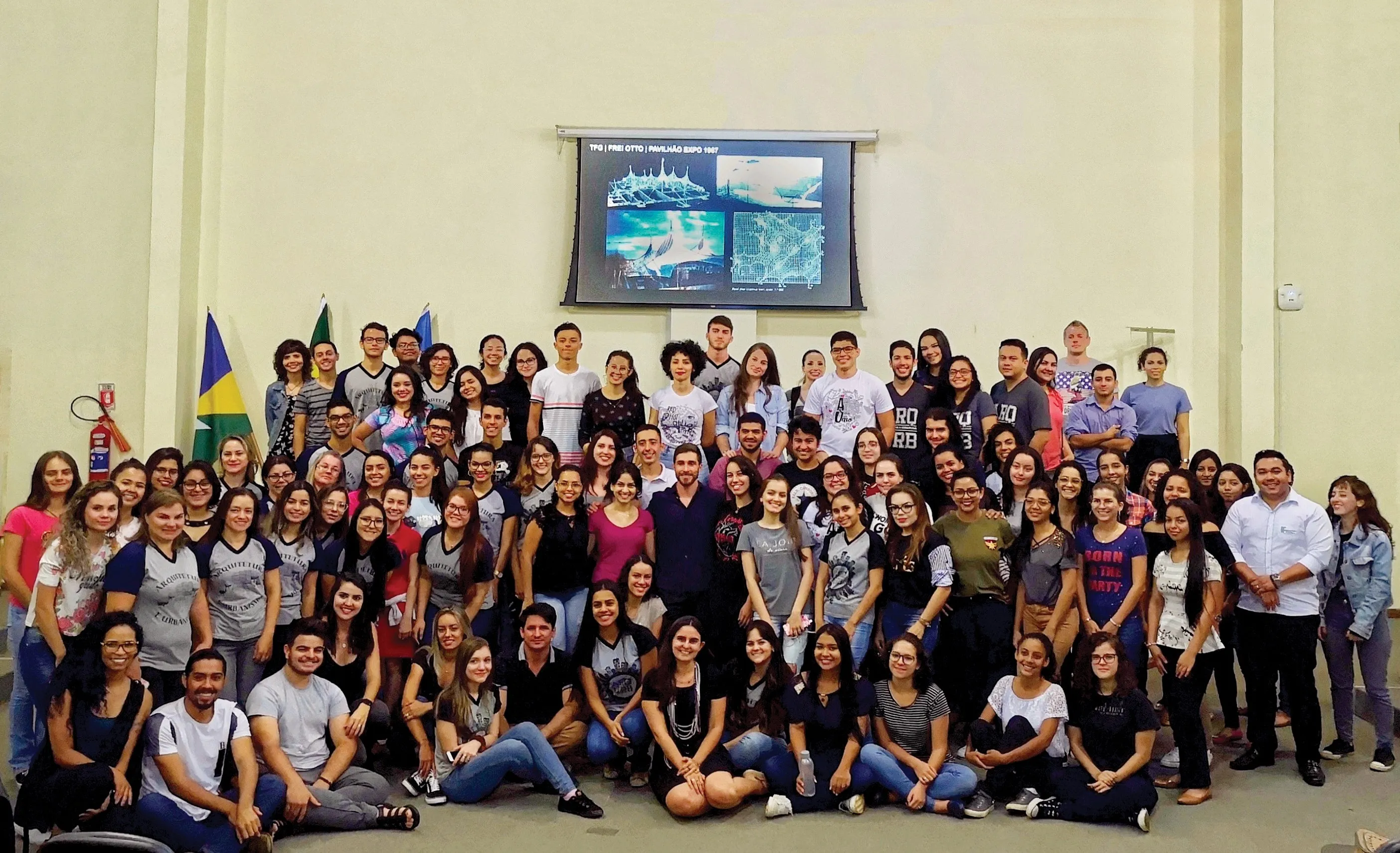
During my visit to my hometown, I proposed a lecture to the architecture and urbanism course of the Federal Institute of Rondônia - IFRO. I presented some works and research that I had done so far and discussed the future of the profession amid so many technological changes.
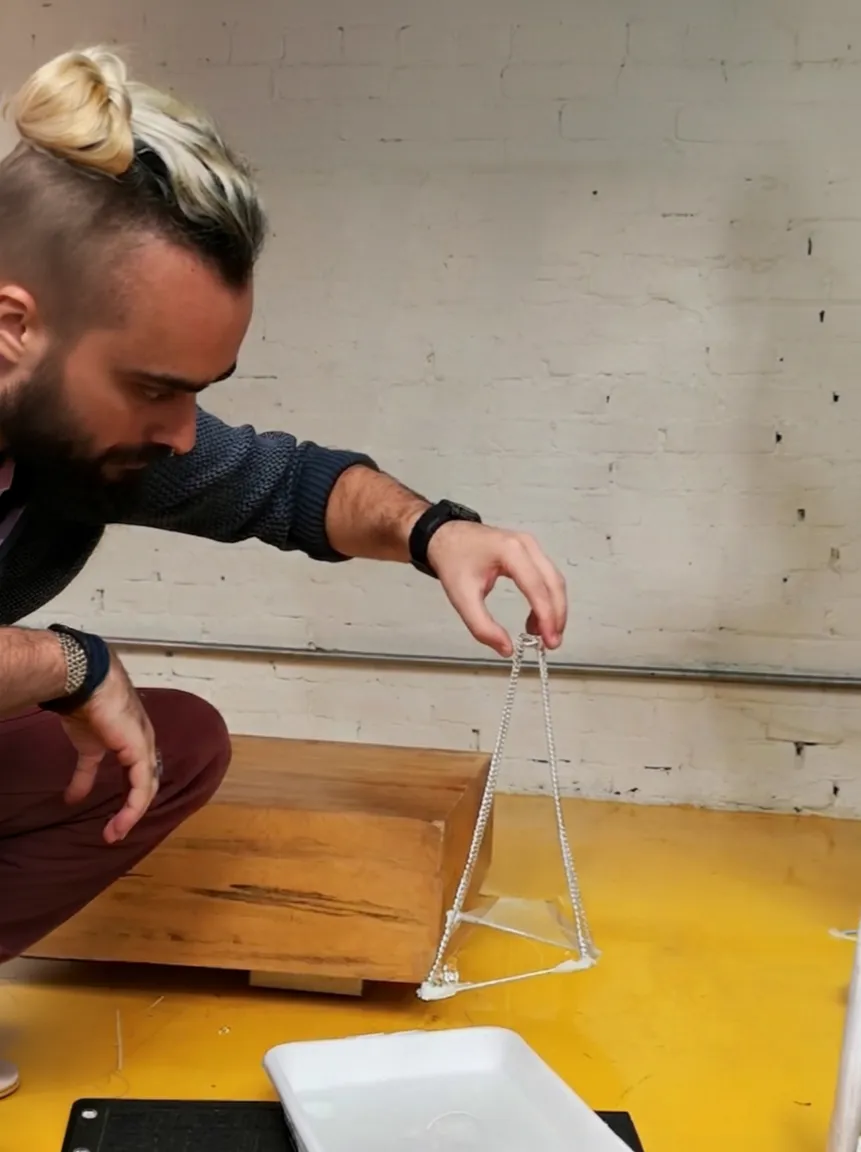
The second edition of the Models byNature workshop expanded on the first with four Saturdays of parametric design with Grasshopper inspired by nature, covering form-finding experiments, computational modeling, and biomimetics at Atelier Marko Brajovic in São Paulo.
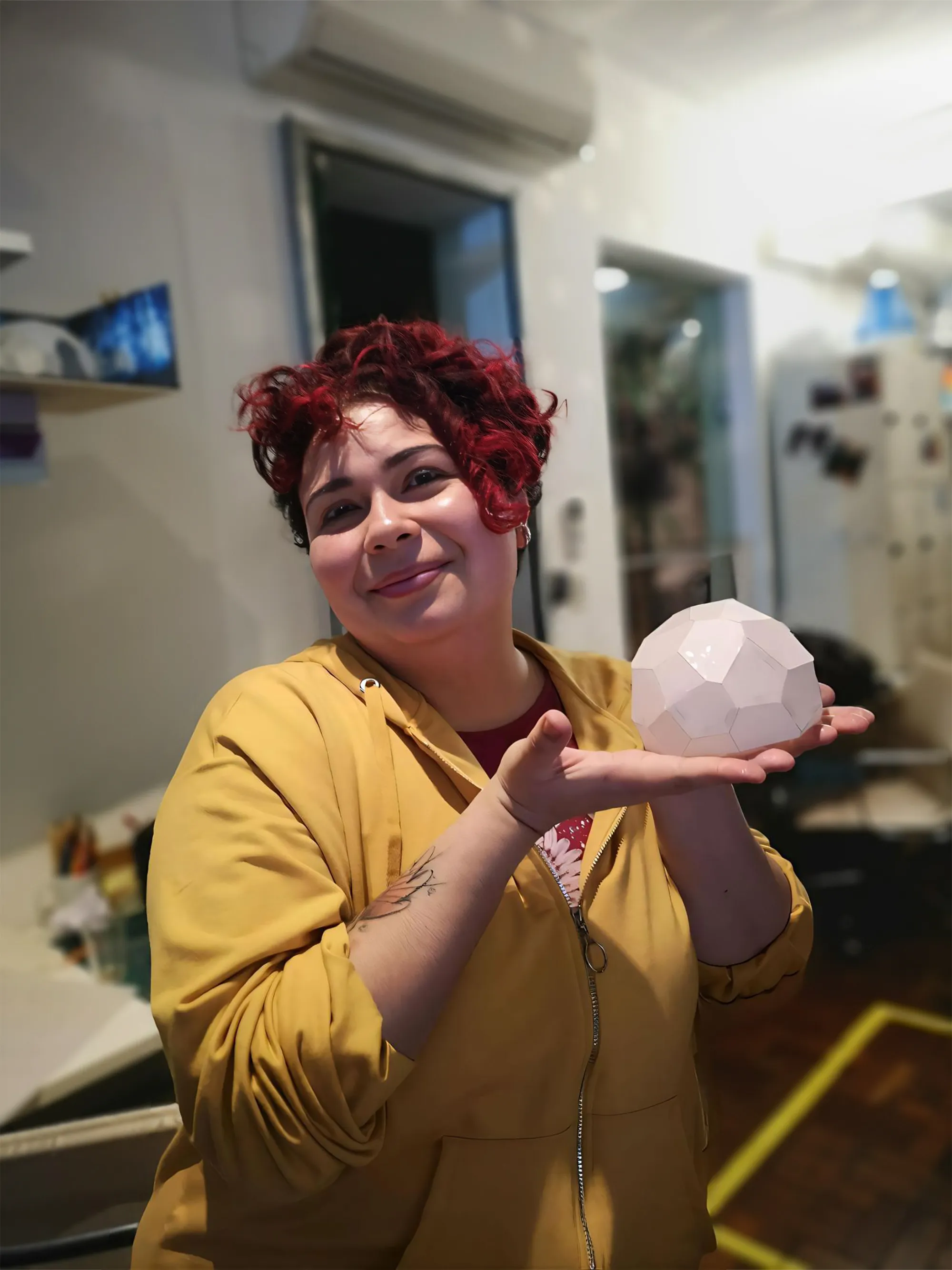
This workshop sought to connect computational design practices with natural phenomena, addressing topics such as associative modeling, biomimetics and visual programming language.
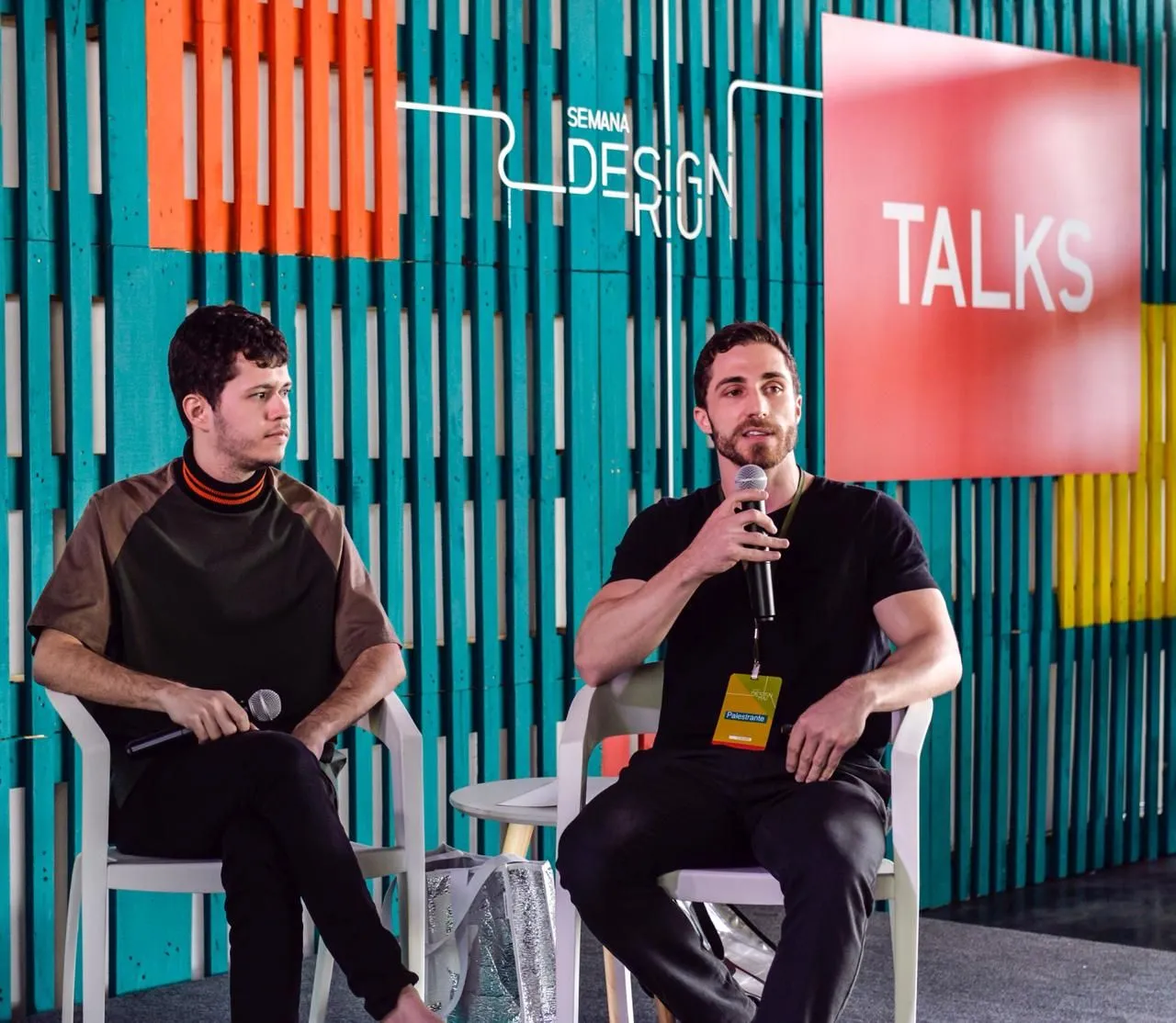
A talk at Semana Design Rio 2018 exploring seven principles from nature applied to parametric design, with project case studies from Atelier Marko Brajovic.
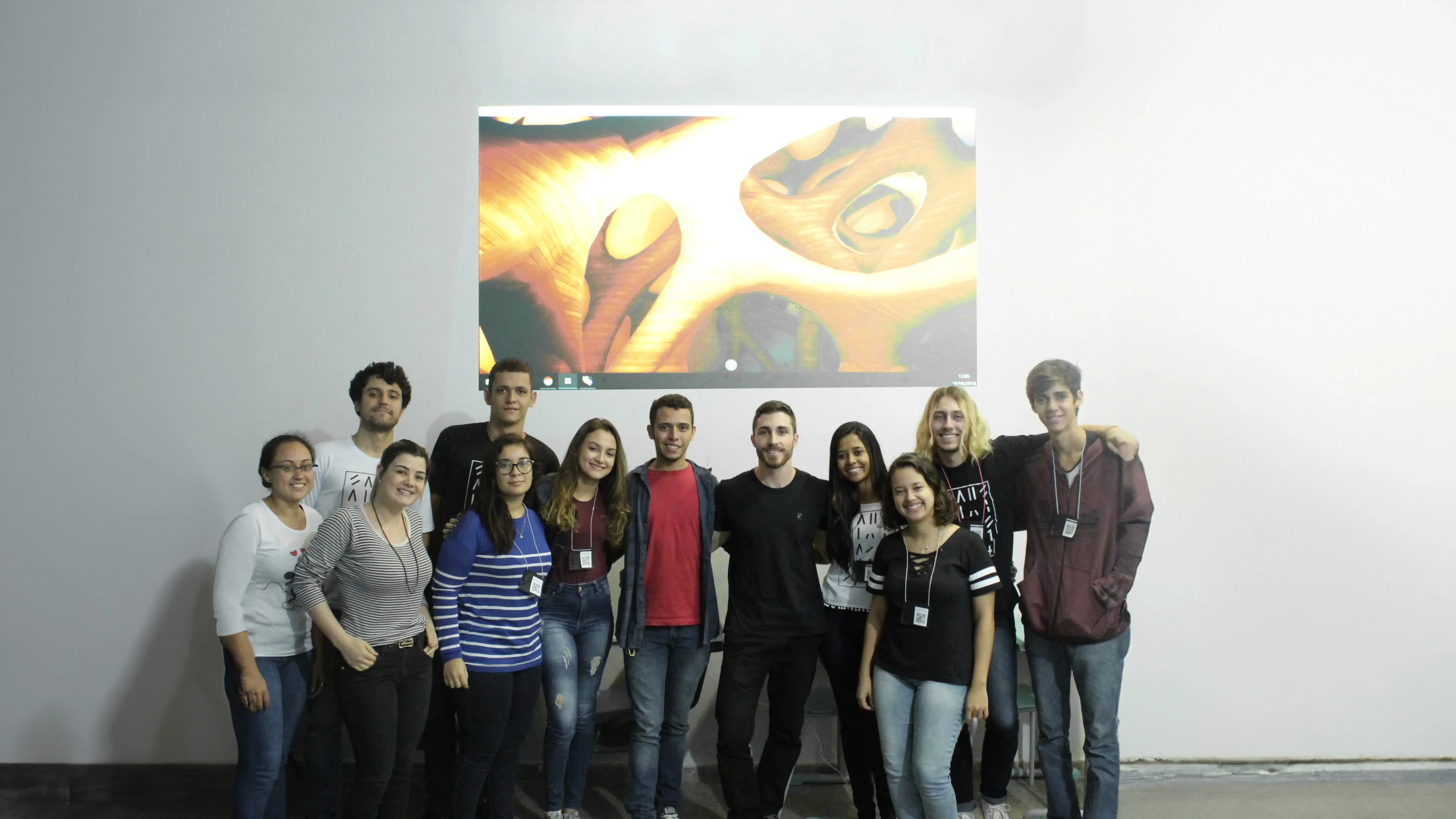
In addition to learning the basics of Grasshopper for Rhinoceros, participants were able to decide the direction of the course by choosing which computational design strategy to explore. In this case, they chose Exoskeleton.
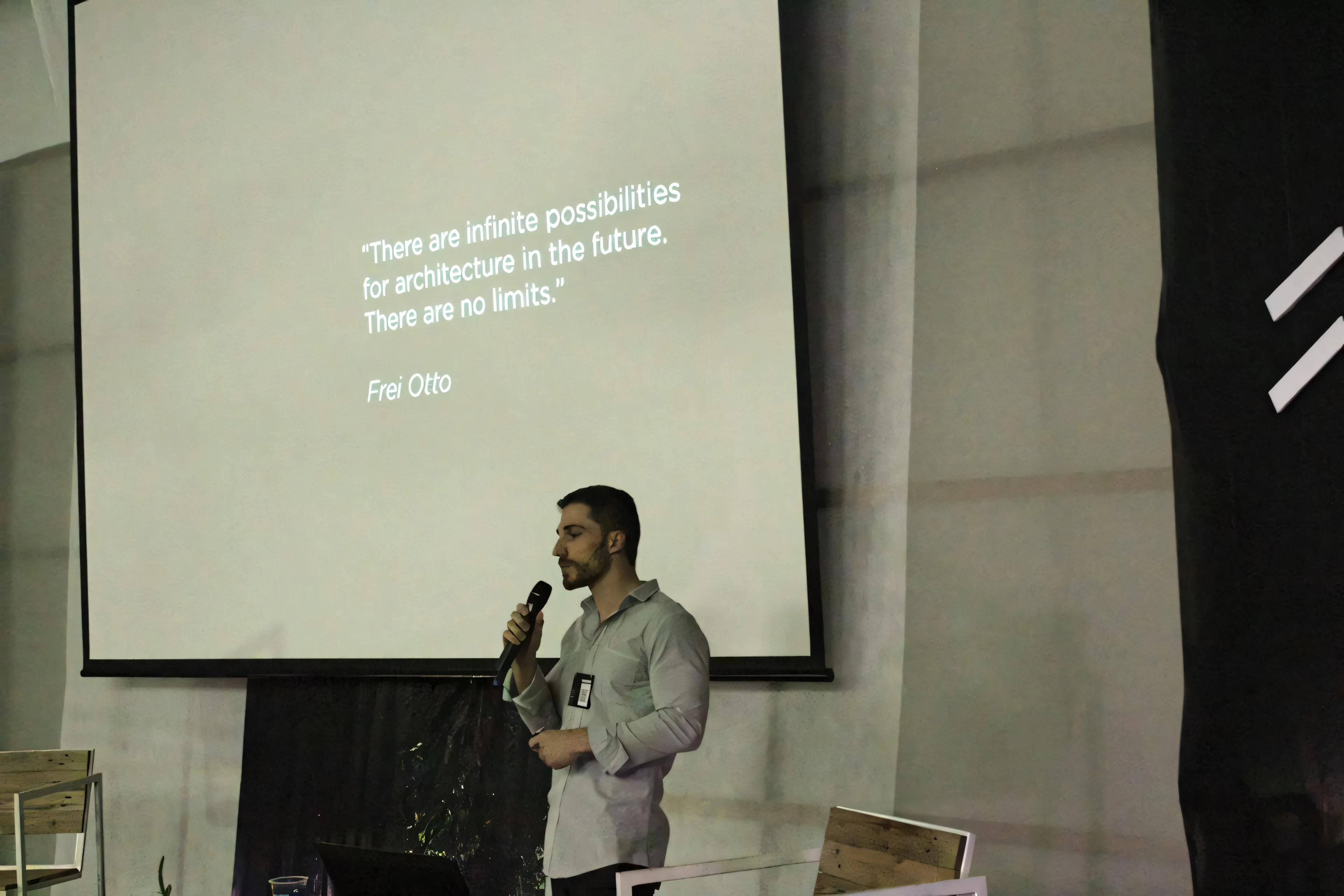
UNEMAT was the first university where I studied Architecture. Ten years after the beginning of my studies there, I presented this talk about my whole trajectory, from my university transfer to the FAU-USP, my work at Atelier Marko Brajovic, and my recent career shift, focusing more specifically on Computational Design and programming.
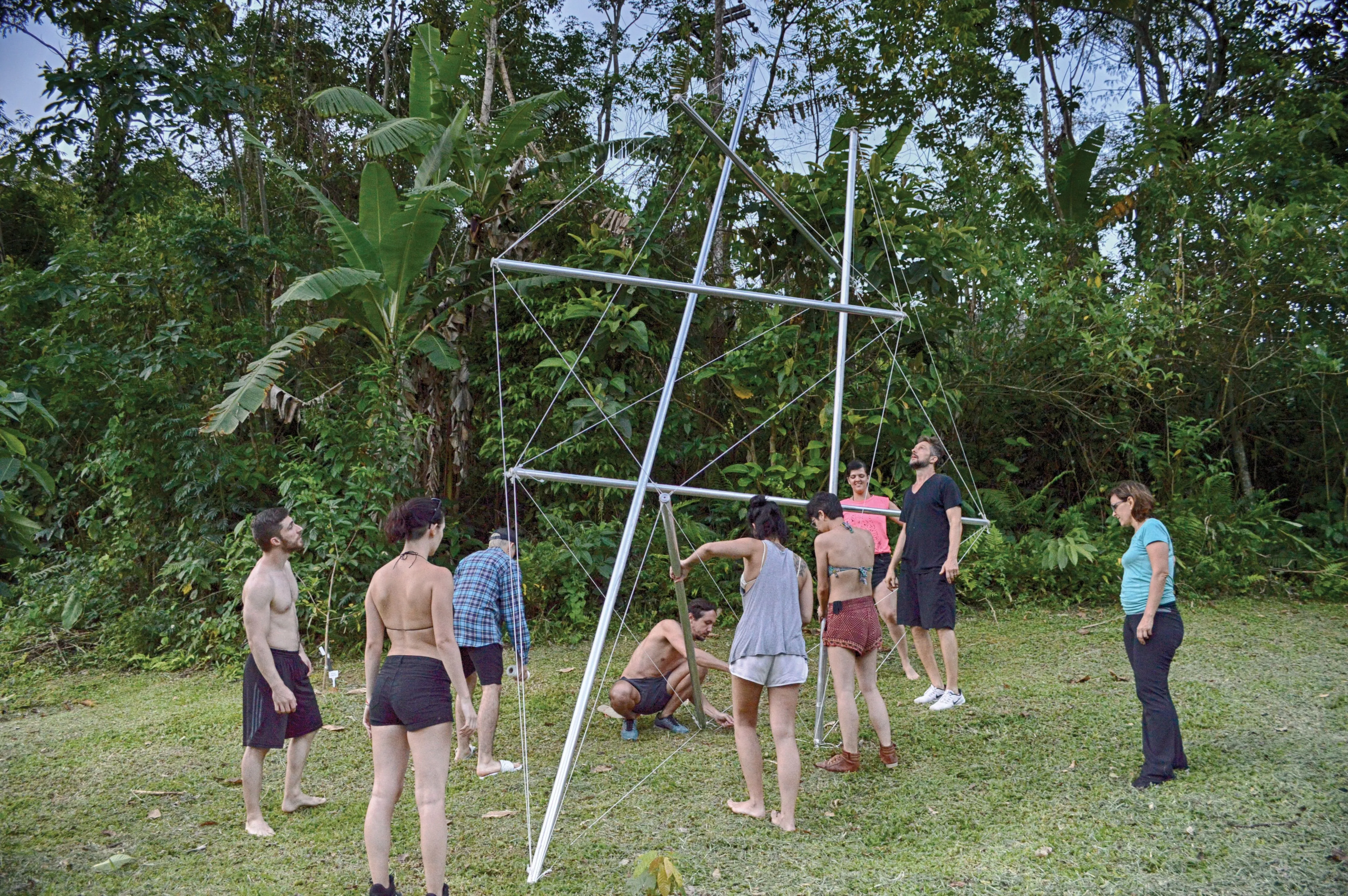
A team-building workshop where we collectively built a tensegrity structure, discovering how the balance of forces in the structure mirrored our own collaborative dynamics.