ITKE Research Assistant for Coreless Filament Winding
| Date | |
|---|---|
| Last updated | |
| Organization | ITKE - University of Stuttgart |
| Director | Achim Menges |
| Manager | Marta Gil Pérez |
| Team | Daniel Nunes Locatelli, Anand Shah, Francesca Maisto |
| Place | Botanic Garden Freiburg |
| Location | Stuttgart, Germany |
| Link | livMatS Pavilion 2020-21 |
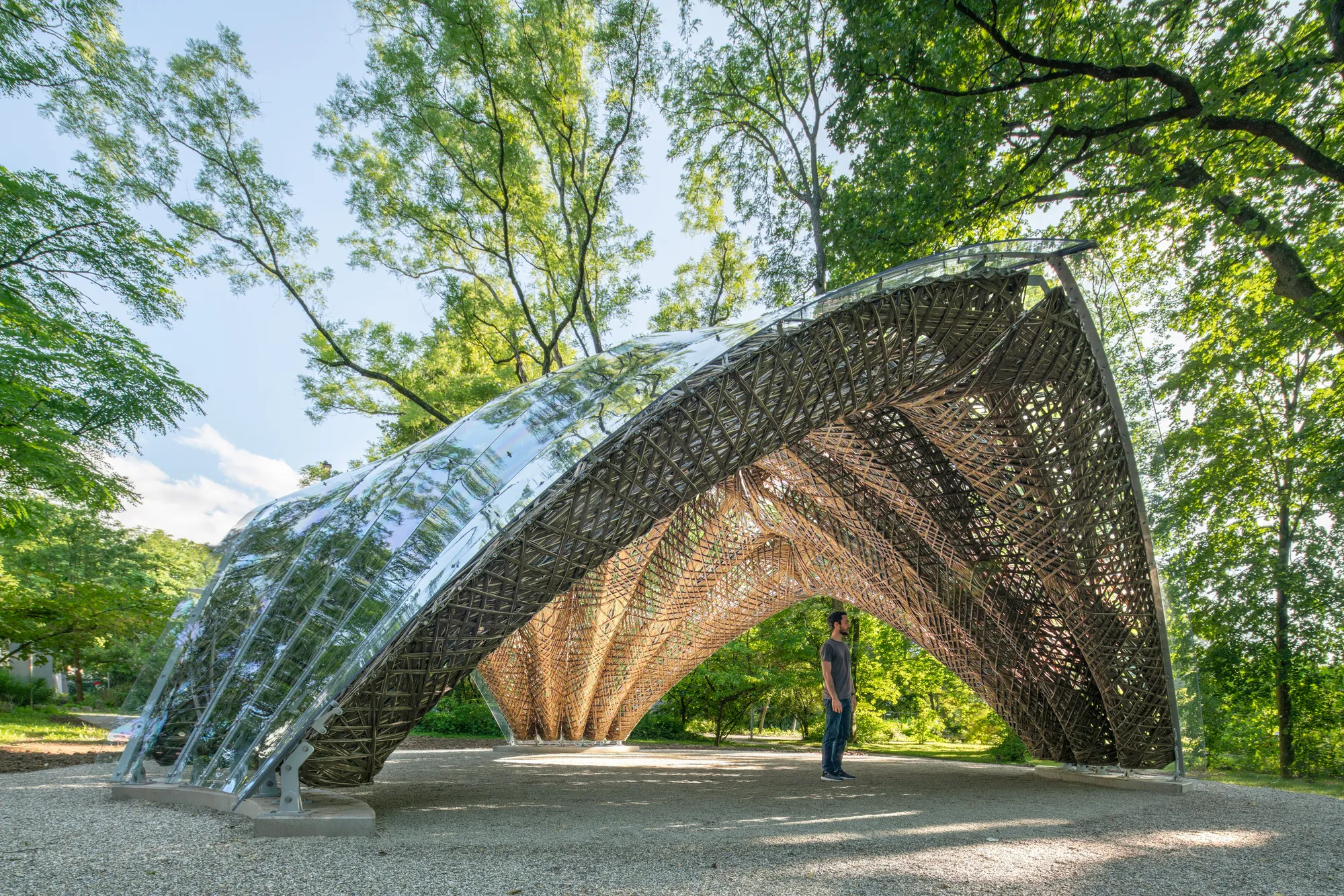
The livMatS Pavilion (a collaboration between the ICD, ITKE, and the Cluster of Excellence livMatS at the University of Freiburg) pushed the boundaries of coreless filament winding by using natural fibers instead of carbon or glass. The pavilion was eventually installed at the Botanic Garden in Freiburg, but before any of that could happen, the structural components needed to be rigorously tested.
The challenge
Unlike carbon fiber composites, which have decades of engineering data behind them, natural fiber composites are far less predictable. The mechanical properties vary depending on fiber source, moisture content, and winding patterns. At the time, there was no reliable method to computationally simulate the structural behavior of these natural fiber wound elements. The only way to validate the design was through full-scale physical load tests.
My role
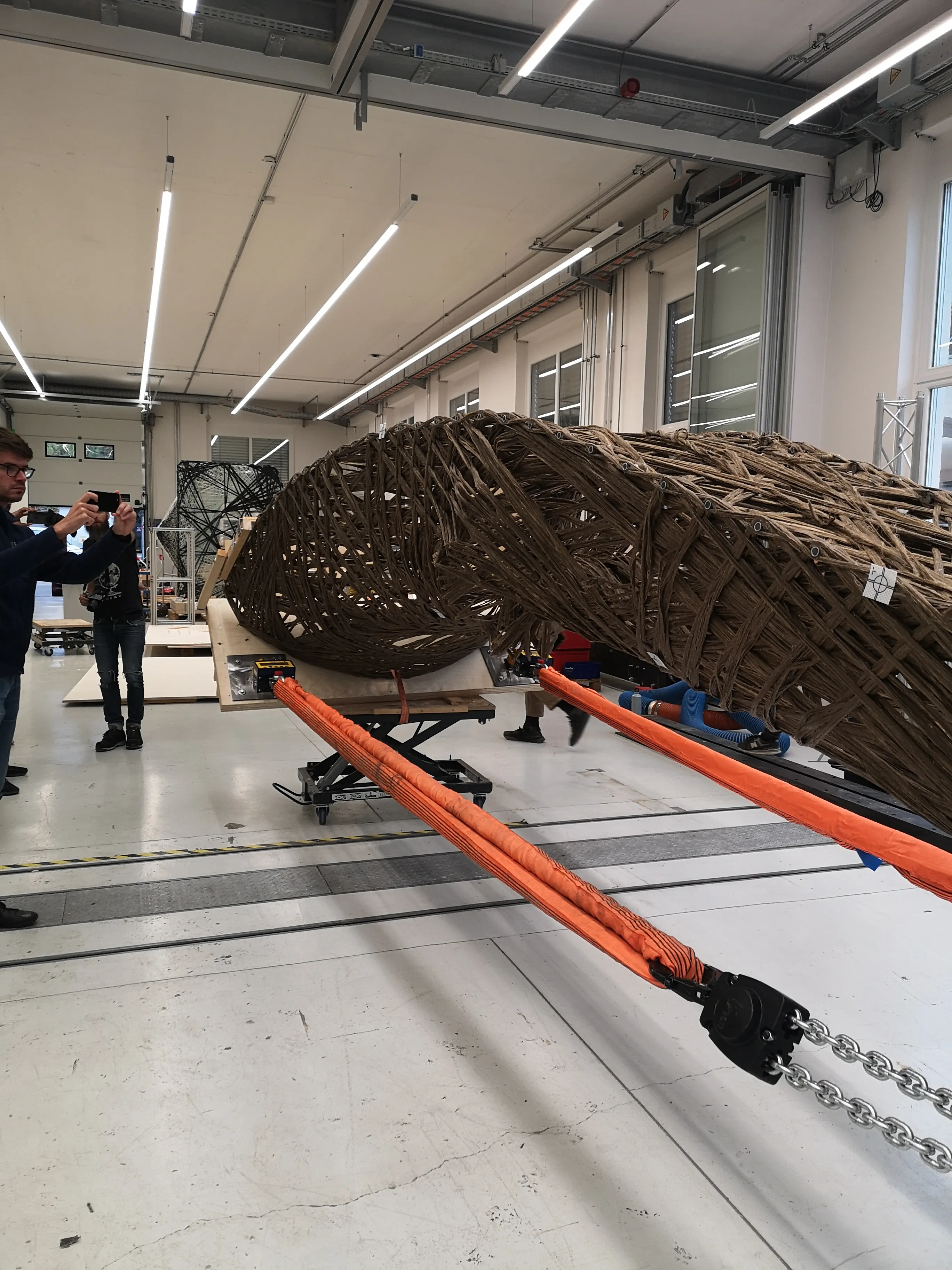
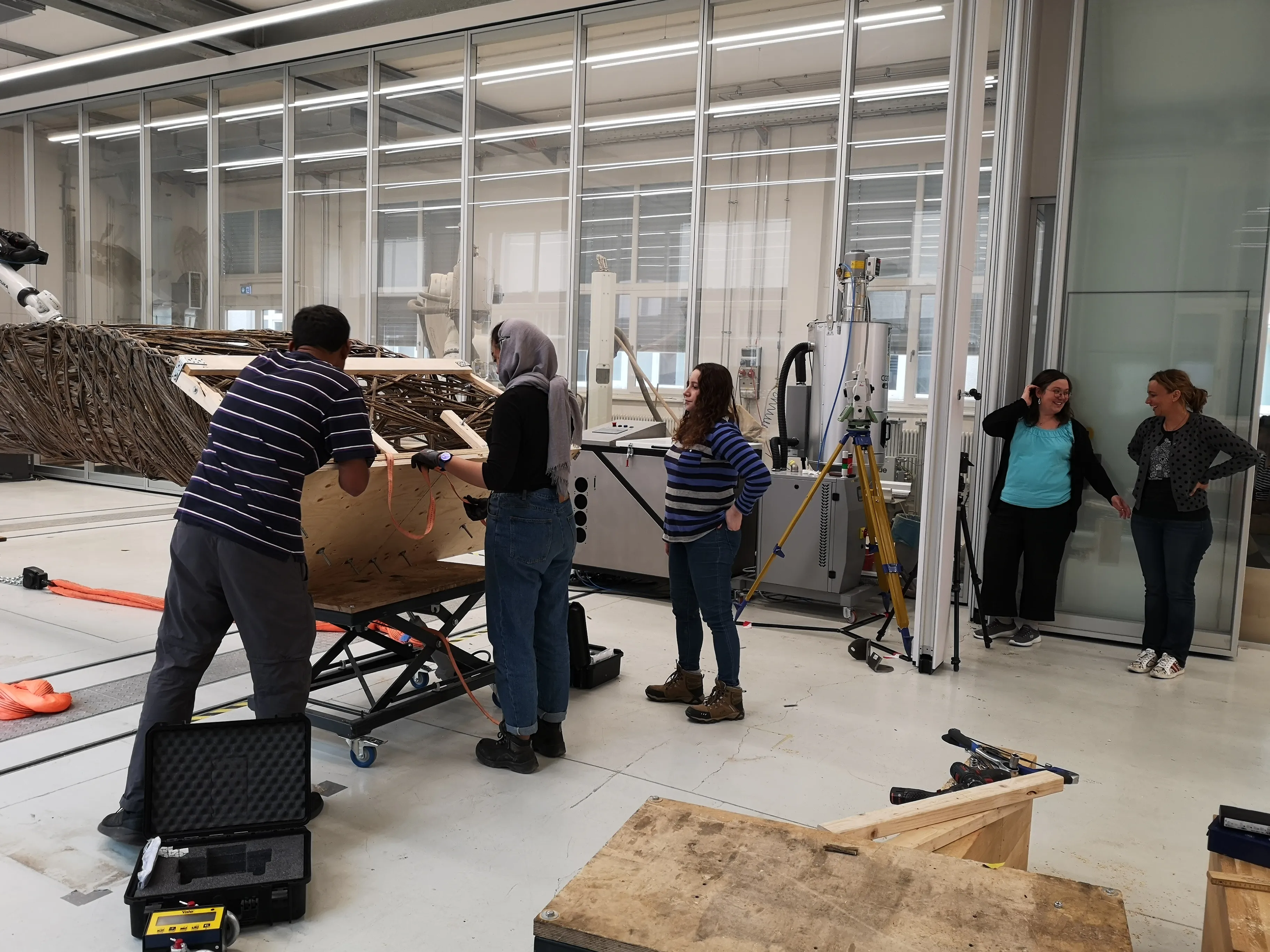
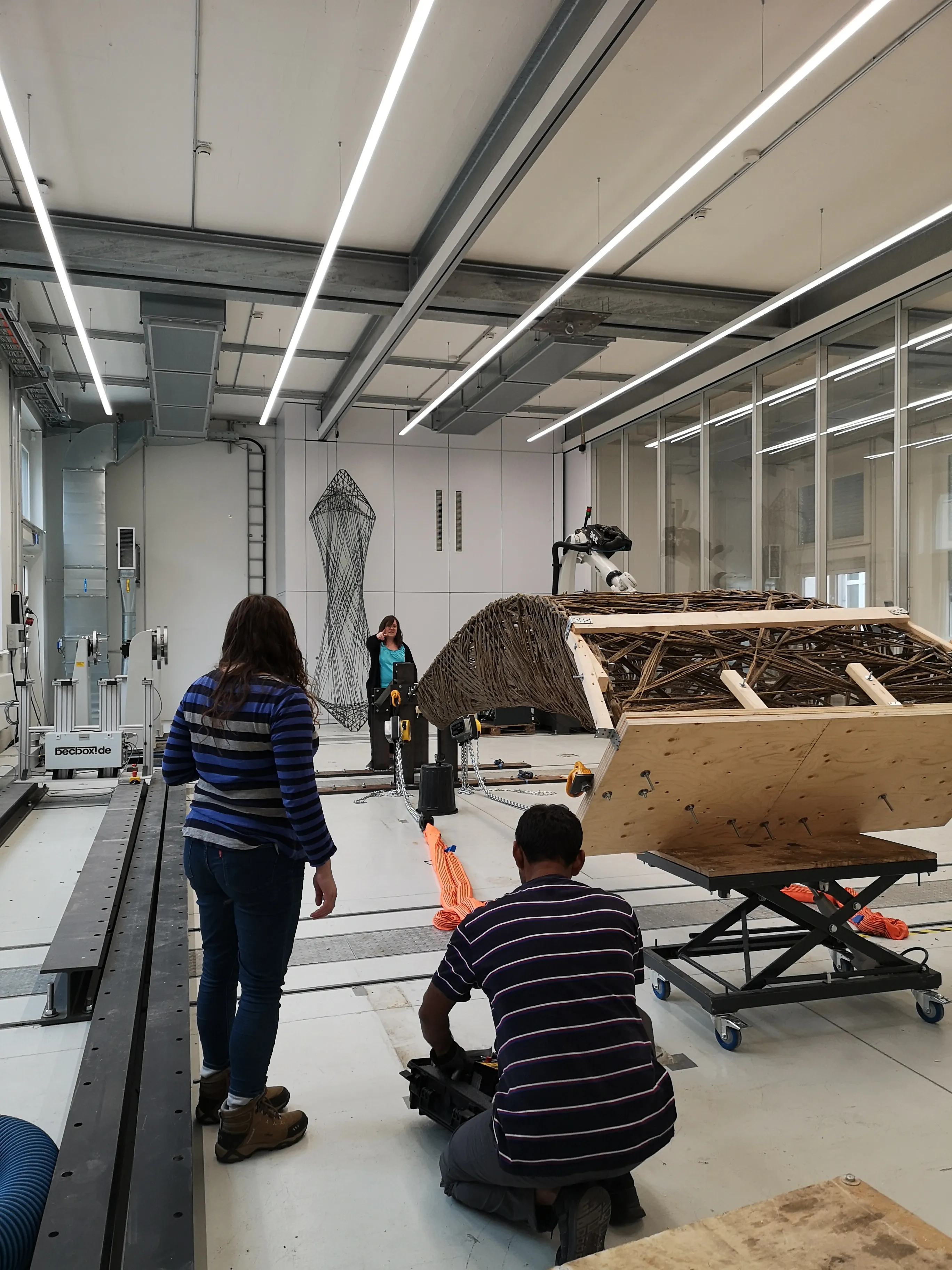
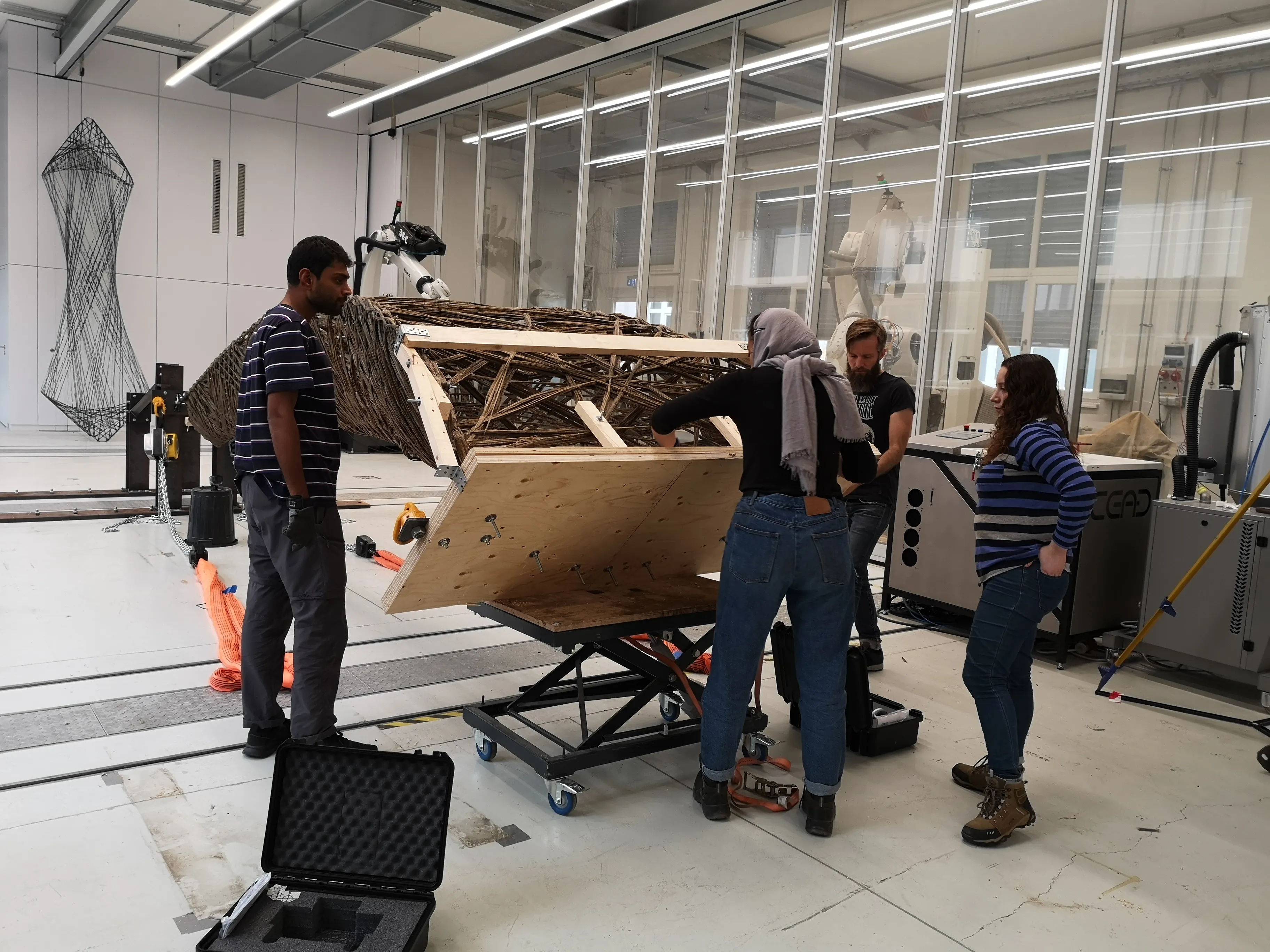
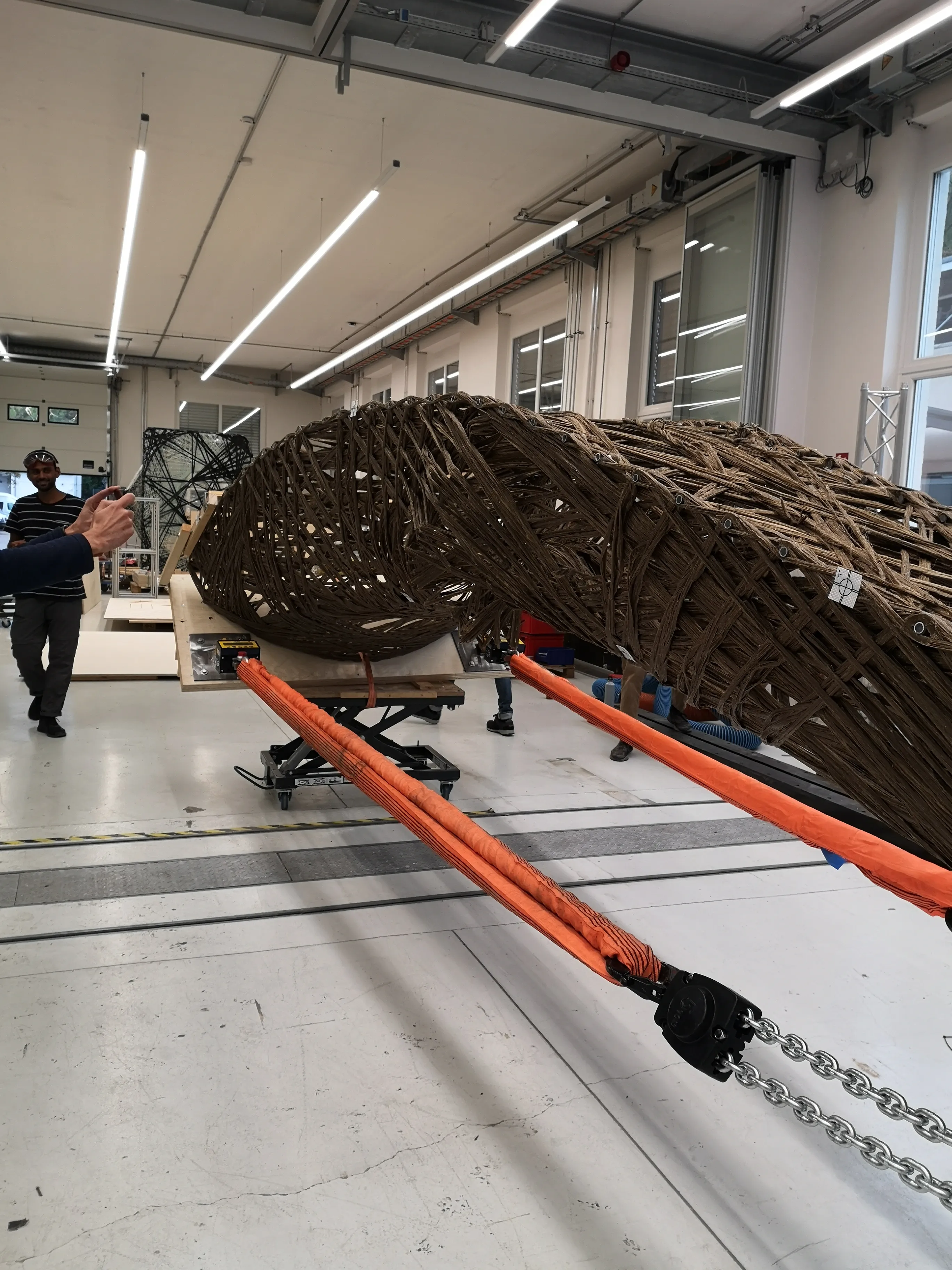
As a research assistant under Marta Gil Pérez, I helped prepare and execute the load tests. The specimens (large natural fiber wound elements fabricated by the ITECH 2020 class) were mounted on hydraulic platforms and subjected to controlled forces using industrial load straps.
Simulation vs. reality
What made this experience stand out was witnessing firsthand the gap between computational prediction and physical behavior. Cutting-edge research like this does not yet have reliable structural analysis methods through computer simulation alone. To achieve a structurally safe result, full-scale physical testing is essential.
Marta’s experience and intuition with similar structures were fundamental. After each test, she could identify which adjustments should be made to the design, informed by a combination of measured data and years of hands-on experience with fiber composites. This interplay between simulation, experiment, and intuition is what makes research at the frontier of construction technology so compelling.